




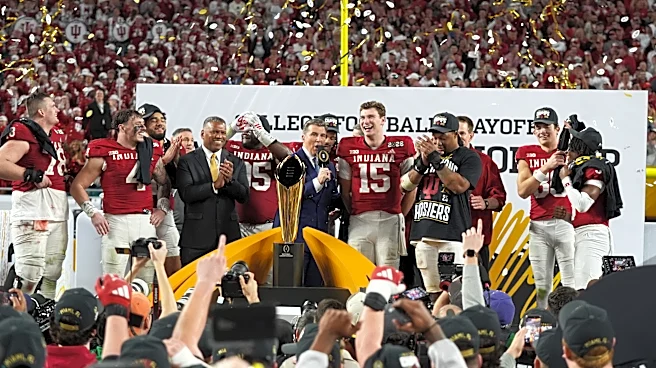

What's Happening?
The NCAA's Football Oversight Committee has approved a proposal that grants conferences the flexibility to select 5-7 teams to fill bowl game slots if there are not enough eligible teams with better records. This decision allows conferences to choose
a 5-7 team that meets a minimum Academic Progress Rate (APR) of 930 to participate in postseason games. The proposal aims to address situations where there are unfulfilled bowl commitments due to a lack of eligible teams. Historically, teams with a 6-6 record or better have filled most of the 41 FBS bowl games, but the new rule provides a mechanism for 5-7 teams to be considered if necessary. The proposal will undergo further review by the Division I Cabinet in June before it is finalized.
Why It's Important?
This development is significant as it provides a structured approach to filling bowl game slots, ensuring that all available opportunities are utilized even when there are not enough teams with winning records. It could potentially increase the number of teams participating in postseason play, offering more exposure and experience for programs that might otherwise miss out. This change could also impact the financial aspects of college football, as bowl games are a source of revenue and visibility for participating schools. By allowing 5-7 teams to participate, the NCAA is ensuring that bowl games remain viable and competitive, which is crucial for maintaining interest and investment in college football.
What's Next?
The proposal is set to be reviewed by the Division I Cabinet in June, which will determine its final approval. If adopted, conferences will need to establish criteria for selecting 5-7 teams, potentially leading to discussions on how academic performance and other factors should weigh into these decisions. Stakeholders, including conference officials and university athletic departments, will likely engage in dialogue to prepare for the implementation of this rule. The decision could also prompt other changes in how bowl eligibility is determined, possibly influencing future NCAA policies.