



What's Happening?
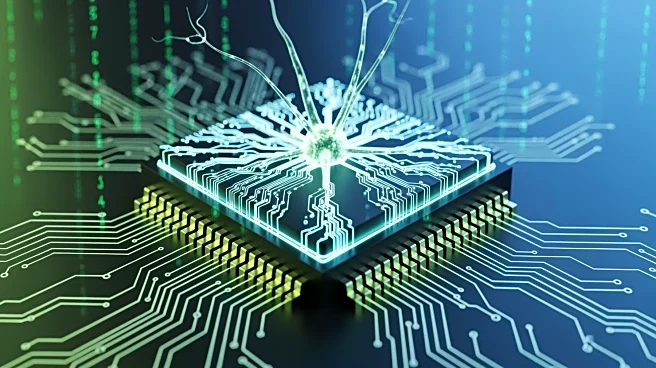
Cortical Labs, an Australian biotech company, has developed a groundbreaking technology that uses living human brain cells to power microchips. These bio-chips, known as CL1, have been trained to play the video game 'Doom' by interacting with the game environment.
The company has now announced plans to use this neuron technology to build AI data centers. The first of these bio-data centers has been constructed in Melbourne, Australia, with a second planned for Singapore. The technology involves converting blood cells from adult volunteers into stem cells, which are then turned into neuron cells and grown directly on the microchip. This innovative approach allows the neurons to learn and adapt in real-time, requiring minimal energy and training data compared to traditional AI systems.
Why It's Important?
The development of neuron-powered microchips represents a significant advancement in AI technology, potentially revolutionizing the way data centers operate. By using living brain cells, these chips offer a more energy-efficient alternative to traditional AI systems, which could lead to reduced operational costs and environmental impact. This technology could disrupt the current AI industry by providing a more sustainable and efficient solution for data processing. Additionally, the ability of these chips to learn and adapt intuitively opens up new possibilities for AI applications, potentially enhancing the capabilities of AI systems across various sectors.
What's Next?
Cortical Labs plans to expand its use of neuron-powered microchips by constructing additional bio-data centers. The company is currently building a second facility in Singapore, although the timeline for its completion and operational status remains unclear. As this technology develops, it is likely to attract attention from major tech companies and investors interested in sustainable and efficient AI solutions. The success of these bio-data centers could lead to wider adoption of neuron-powered technology in the AI industry, prompting further research and development in this field.
Beyond the Headlines
The use of living brain cells in technology raises ethical and philosophical questions about the nature of intelligence and the potential implications of integrating biological components with machines. This development challenges traditional notions of computing and AI, as it blurs the line between biological and artificial intelligence. The long-term impact of this technology on society and the environment will depend on how it is regulated and integrated into existing systems. As the technology matures, it may also influence discussions on the ethical use of biological materials in technological advancements.