
What's Happening?
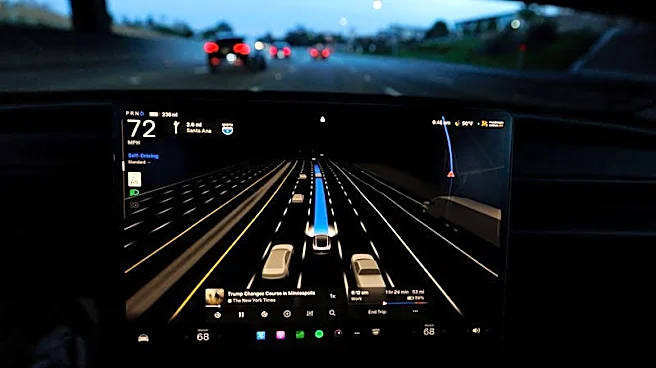
Tesla's Full Self-Driving Supervised (FSD) system has received approval from Dutch regulators for use on highways and city streets, marking a significant milestone for the company in Europe. This approval follows over 18 months of testing by the Dutch vehicle
authority, RDW. The FSD system, which requires human supervision, can steer, brake, and accelerate a vehicle. Tesla's strategy heavily relies on the widespread adoption of autonomous driving technology, and this approval is a step towards that goal. The company plans to roll out the technology in the Netherlands soon, with further expansion across Europe anticipated. Tesla's self-driving technology is already available in the U.S., though it remains under scrutiny due to safety concerns.
Why It's Important?
The approval of Tesla's FSD system in the Netherlands is a crucial development for the company as it seeks to expand its market share in Europe. This move could potentially boost Tesla's vehicle sales in the region, where demand has been sluggish. The approval also highlights the competitive edge Tesla holds in the autonomous vehicle sector, primarily due to its camera-based systems supported by artificial intelligence. However, the technology's safety remains a concern, as evidenced by ongoing investigations in the U.S. The European Union's stricter safety standards could influence the system's implementation and acceptance across the continent.
What's Next?
Following the Dutch approval, Tesla will submit an application for EU-wide authorization of its FSD system. The European Commission will review the application, and member states will vote on extending the authorization across the bloc. A majority decision is required for EU-wide implementation, although individual countries may choose to permit the system independently. Tesla anticipates a broader European approval decision by the summer. The outcome of this process will significantly impact Tesla's strategy and market presence in Europe.