



What's Happening?
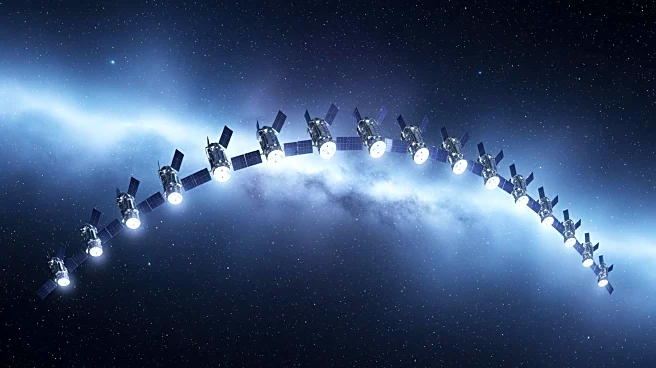
SpaceX has successfully launched a new batch of 29 Starlink satellites into low Earth orbit. The launch took place on January 18, 2026, from Complex 40 at Cape Canaveral Space Force Station in Florida. The Falcon 9 rocket, which carried the satellites, lifted off at 6:31 p.m. EDT. This mission, designated Group 6-100, marks the 24th successful re-flight of the Falcon 9's first stage, which landed on the droneship 'A Shortfall of Gravitas' in the Atlantic Ocean. The Starlink constellation now comprises over 9,500 active satellites, providing internet access to remote regions worldwide. This launch is SpaceX's 8th of the year and the 591st Falcon 9 mission since 2010.
Why It's Important?
The expansion of the Starlink satellite network is significant as it enhances
global internet connectivity, particularly in remote and underserved areas. This development supports SpaceX's mission to provide high-speed internet access worldwide, bridging the digital divide. The successful deployment of these satellites also demonstrates SpaceX's growing capability in reusing rocket components, which can reduce costs and increase the frequency of launches. The Starlink network's ability to support wifi on airlines and direct cell-to-satellite calls further underscores its potential impact on global communication infrastructure.
What's Next?
As SpaceX continues to expand its Starlink constellation, the company is likely to focus on increasing the network's capacity and coverage. Future launches will aim to add more satellites, enhancing the service's reliability and speed. Additionally, SpaceX may explore partnerships with telecommunications providers to integrate Starlink's capabilities into existing networks. Regulatory challenges and competition from other satellite internet providers could influence the pace and direction of Starlink's expansion.