







What's Happening?
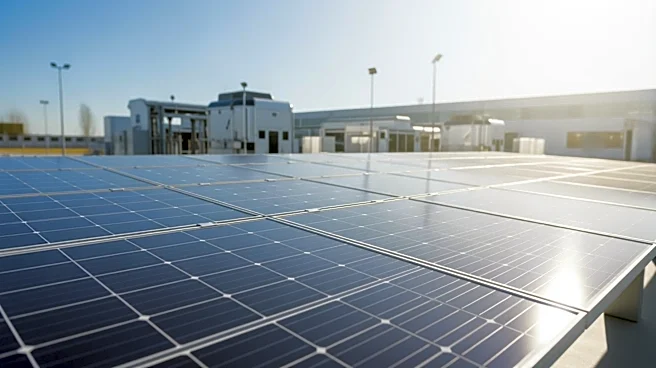
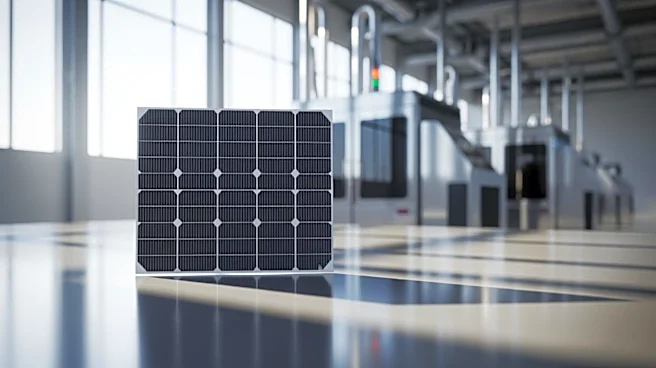
Qcells has commenced operations at its new solar cell manufacturing facility in Cartersville, Georgia. This factory is set to become the largest of its kind in the United States, producing key components of solar photovoltaic (PV) modules, including ingots,
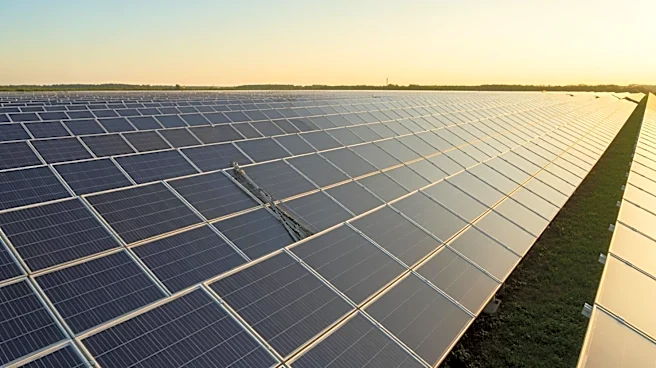
wafers, cells, and modules. The facility is designed to be a vertically integrated production site, which means it will handle all stages of solar module production under one roof. This development is part of Qcells' strategy to enhance its U.S. output to 8.6 gigawatts by the third quarter of 2026, enough to power approximately 1.3 million American homes annually. The Cartersville plant is expected to produce 16,700 solar PV modules daily and will significantly contribute to the domestic solar equipment supply chain.
Why It's Important?
The establishment of the Cartersville facility is a significant step in bolstering the U.S. solar manufacturing industry. It aligns with federal incentives aimed at increasing domestic production of renewable energy components, thereby reducing reliance on imports. The facility's ability to produce all major parts of a solar PV module domestically allows customers to qualify for a 10% domestic content bonus under the Investment Tax Credit. This move not only enhances supply chain security but also positions Qcells to meet the growing demand for solar equipment in the U.S. market. Additionally, the factory is expected to create nearly 4,000 jobs in Georgia, contributing to local economic growth and supporting the national transition to clean energy.
What's Next?
As the Cartersville facility ramps up to full production capacity, it is poised to become a cornerstone of the U.S. solar manufacturing landscape. The factory's output will likely attract significant interest from solar project developers seeking reliable and cost-effective domestic sources for solar modules. Furthermore, the success of this facility could encourage other companies to invest in similar projects, further strengthening the U.S. renewable energy sector. Policymakers and industry stakeholders will be closely monitoring the impact of this development on the broader energy market and its potential to drive further innovation and investment in clean energy technologies.