







What's Happening?
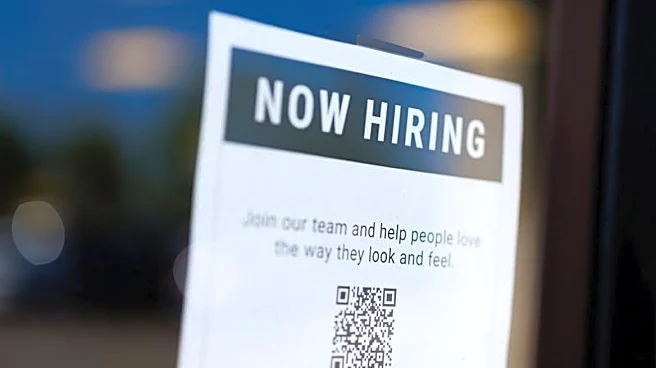
The U.S. economy added 115,000 jobs in April, exceeding economists' expectations of 65,000, according to the Labor Department. The unemployment rate remained steady at 4.3%. This growth follows a revised increase of 185,000 jobs in March. The healthcare
and social assistance sector led the gains, adding nearly 54,000 jobs, while transportation and warehousing added over 30,000 positions. However, the information sector saw a decline of 13,000 jobs. Economists view this as a sign of stabilization in the labor market, which had been sluggish for much of 2025. The Federal Reserve has noted that the aging population and reduced immigration have lowered the job growth needed to maintain a stable unemployment rate.
Why It's Important?
The stronger-than-expected job growth in April suggests a stabilizing labor market, which is crucial for economic recovery. The healthcare sector's continued expansion highlights its role as a key driver of employment. However, the decline in the information sector indicates ongoing challenges in certain industries. The Federal Reserve's acknowledgment of demographic shifts affecting labor dynamics underscores the need for policy adjustments to sustain economic growth. This job report may influence future monetary policy decisions, as the Fed balances employment growth with inflation concerns.
What's Next?
Future job reports will be closely monitored to assess the labor market's trajectory. Policymakers may consider additional measures to support sectors lagging in recovery. The Federal Reserve's response to these employment trends will be critical, particularly in terms of interest rate adjustments. Businesses and investors will watch for signals on how these developments might impact economic policy and market conditions.