





What's Happening?
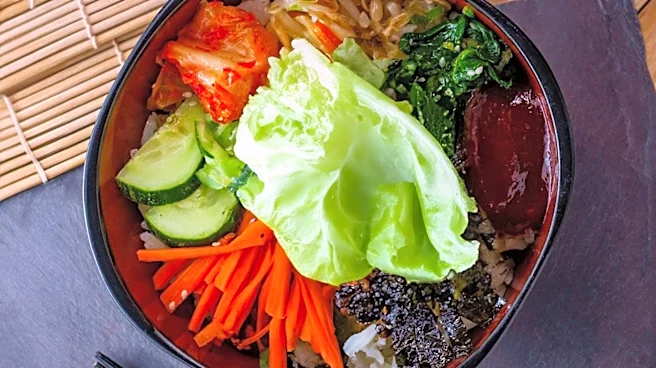
Korean cuisine is experiencing a surge in popularity in the UK, with dishes like bibimbap, bulgogi, and Korean fried chicken becoming increasingly sought after. The cuisine is known for its bold flavors, often featuring ingredients such as soy sauce,
sesame oil, kimchi, and gochujang, a sweet and spicy chili paste. The demand for these flavors has been reflected in the rising sales of Korean ingredients, such as gochujang, which saw a 71% increase in sales at Waitrose since 2024. Korean fried chicken, known for its thin, crispy coating achieved through double-frying, has been named one of Just Eat's top 10 takeaways of 2026. The popularity of Korean food is also evident in the long queues at Korean food festivals in London, showcasing the growing interest in this vibrant cuisine.
Why It's Important?
The growing popularity of Korean cuisine in the UK highlights a broader trend of increasing interest in international flavors and culinary diversity. This trend not only benefits Korean restaurants and food producers but also encourages cultural exchange and understanding through food. The rise in demand for Korean ingredients and dishes can lead to economic opportunities for businesses involved in the import and distribution of these products. Additionally, the popularity of Korean cuisine can influence food trends and inspire chefs and home cooks to experiment with new flavors and cooking techniques, further enriching the culinary landscape.
What's Next?
As Korean cuisine continues to gain traction, it is likely that more restaurants and food outlets will incorporate Korean dishes into their menus, catering to the growing demand. This could lead to an increase in the availability of Korean ingredients in supermarkets and specialty stores, making it easier for consumers to recreate these dishes at home. Additionally, the popularity of Korean food may inspire culinary innovation, with chefs experimenting with fusion dishes that combine Korean flavors with other cuisines. The continued interest in Korean cuisine could also lead to more cultural events and festivals celebrating Korean food and culture, further promoting cross-cultural understanding and appreciation.
Beyond the Headlines
The rise of Korean cuisine in the UK reflects a broader global trend of increasing interest in diverse and international foods. This trend is driven by factors such as globalization, increased travel, and the influence of social media, which exposes people to new culinary experiences. The popularity of Korean food also highlights the role of food as a cultural ambassador, providing a platform for sharing and celebrating cultural heritage. As more people embrace Korean cuisine, it can lead to greater cultural appreciation and understanding, fostering a more inclusive and interconnected world.