




What's Happening?
Rivian Automotive, led by CEO RJ Scaringe, has announced plans to introduce a self-driving system similar to Tesla's Full Self-Driving (FSD) later this year. This system will initially offer supervised point-to-point driving, with unsupervised driving expected
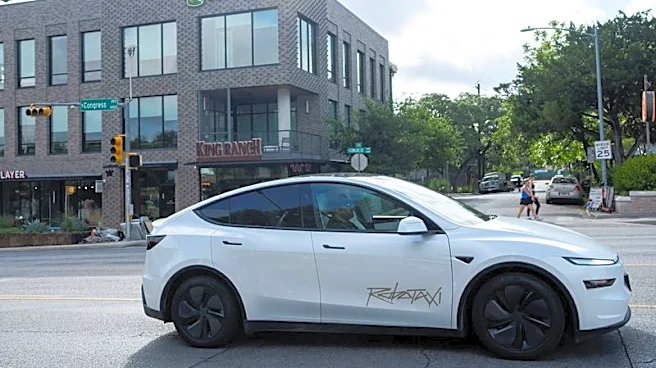
by 2027. Rivian's long-term goal is to develop fully driverless vehicles capable of handling tasks such as airport drop-offs, grocery runs, and school pickups. The company's push towards autonomy is further supported by its partnership with Uber, aiming to deploy 50,000 R2 robotaxis and commence paid rides by 2028. This announcement has positively impacted Rivian's stock, which saw a 2% increase overnight.
Why It's Important?
Rivian's move into autonomous driving represents a significant step in the competitive electric vehicle (EV) market, particularly as it positions itself against industry leader Tesla. By developing a self-driving system, Rivian aims to capture a share of the growing demand for autonomous vehicles, which could transform urban transportation and logistics. The partnership with Uber provides Rivian with a substantial distribution channel, potentially accelerating the adoption of its technology. This development could also influence the broader EV market by increasing competition and innovation, potentially leading to more consumer choices and advancements in vehicle autonomy.
What's Next?
Rivian plans to roll out its supervised self-driving system later this year, with unsupervised driving capabilities expected by 2027. The company will continue to develop its technology, aiming for fully driverless vehicles. The partnership with Uber will be crucial in deploying 50,000 R2 robotaxis, with paid rides anticipated to begin in 2028. As Rivian progresses, it may face regulatory challenges and competition from other automakers pursuing similar technologies. The success of these initiatives will depend on technological advancements, regulatory approvals, and consumer acceptance of autonomous vehicles.