



What's Happening?
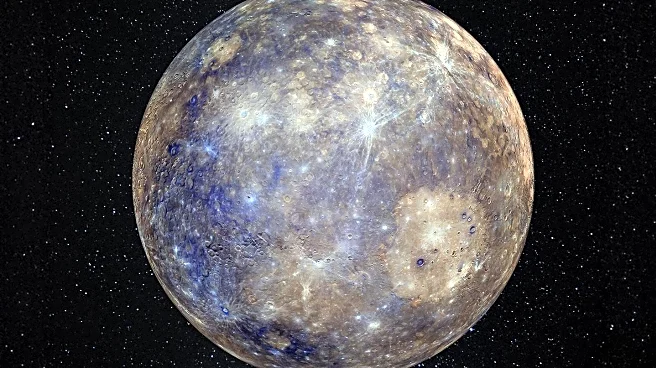
February 2026 offers a series of astronomical events for skywatchers, particularly in the Northern Hemisphere. On February 19, Mercury will reach its greatest eastern elongation, making it visible in the twilight sky. This is a rare opportunity to see the planet, which is often obscured by the sun's glare. Later in the month, on February 28, a 'parade' of six planets—Mercury, Venus, Saturn, Jupiter, Uranus, and Neptune—will be visible in the early evening sky. This alignment, while not as crowded as the previous year's seven-planet parade, still presents a unique viewing opportunity. Venus and Jupiter will be the most visible, while Uranus and Neptune may require binoculars or a telescope.
Why It's Important?
These astronomical events provide a unique opportunity
for both amateur and professional astronomers to observe planetary alignments and the visibility of Mercury. Such events can inspire interest in astronomy and science, encouraging educational activities and public engagement with space exploration. The visibility of multiple planets in a single evening can also enhance public understanding of our solar system's dynamics. For those interested in astrophotography, these events offer a chance to capture rare celestial phenomena.
What's Next?
Following these events, skywatchers can look forward to more astronomical phenomena throughout the year. The visibility of planets and other celestial events will continue to be a focus for astronomers and enthusiasts. Educational institutions and observatories may organize viewing events to engage the public and promote interest in astronomy. Additionally, these events may contribute to ongoing research and observation projects aimed at understanding planetary movements and their effects on Earth.