







What's Happening?
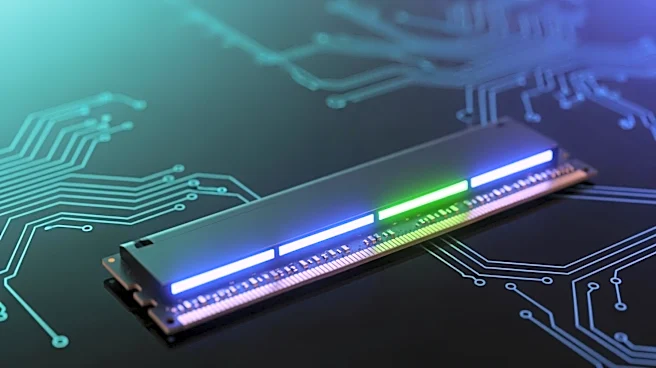
Micron Technology, along with Samsung Electronics and SK Hynix, is experiencing significant growth due to a surge in demand for DRAM memory, a critical component for artificial intelligence (AI) systems. These companies collectively control 95% of the
global DRAM supply, which has seen a 497% price increase over the past year, according to South Korean export data. This price surge is attributed to the high demand for memory in AI data centers, which require substantial amounts of memory to function efficiently. Micron's revenue has tripled year-over-year, reaching $23.9 billion, with adjusted earnings increasing eightfold, driven by high-bandwidth memory (HBM) demand. The AI industry's reliance on memory has turned these suppliers into key players, as AI systems need both processing power and memory to operate effectively.
Why It's Important?
The surge in DRAM prices highlights a critical bottleneck in the AI supply chain, emphasizing the importance of memory in AI infrastructure. As AI systems expand, the demand for memory is expected to continue growing, positioning Micron, Samsung, and SK Hynix as pivotal players in the tech industry. This situation presents both opportunities and risks, as these companies can capitalize on the high demand and pricing power. However, the cyclical nature of memory markets means that prices could eventually stabilize as supply catches up. For now, the increased memory costs are unlikely to deter AI infrastructure development, as the overall economics remain favorable for companies investing in AI services.
What's Next?
As the demand for AI infrastructure continues to rise, memory suppliers are likely to maintain their strong market positions. The ongoing investment in AI data centers by major tech companies suggests that the demand for DRAM and HBM will persist. However, the potential for new entrants or technological advancements could eventually alter the market dynamics. In the short term, memory suppliers are expected to benefit from the current pricing environment, but they must remain vigilant to changes in supply and demand that could impact their profitability.
Beyond the Headlines
The current situation underscores the strategic importance of memory in the AI industry, which could lead to increased investment in memory production and innovation. As AI applications become more widespread, the pressure on memory suppliers to meet demand will likely drive advancements in memory technology. Additionally, the concentration of DRAM supply among a few companies raises questions about market competition and the potential for regulatory scrutiny. The long-term implications of this supply chain concentration could influence future industry standards and practices.