



What's Happening?
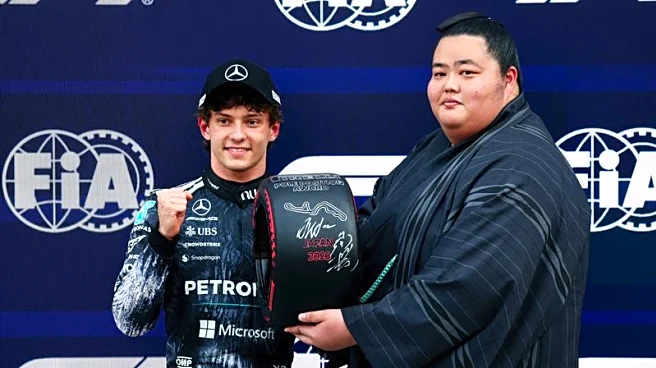
Kimi Antonelli secured his second career win at the Japanese Grand Prix, taking the lead in the Drivers' World Championship. Despite a poor start that saw him drop to fifth, Antonelli capitalized on a safety car situation to regain the lead. Oscar Piastri
initially led the race but finished second, while Charles Leclerc claimed third after intense battles. Antonelli's victory marks a significant shift in the championship standings, overtaking George Russell, who was previously favored to win. The race featured strategic pit stops and retirements, including Lance Stroll's third consecutive retirement due to mechanical issues.
Why It's Important?
Antonelli's victory at the Japanese GP is pivotal in the Formula 1 championship race, as it shifts the dynamics among the top contenders. His ability to leverage race conditions and strategic decisions highlights the importance of adaptability in motorsport. This win not only boosts Antonelli's standing but also impacts the strategies of other teams and drivers as they reassess their approaches for upcoming races. The outcome of this race could influence sponsorships, team dynamics, and the competitive landscape of Formula 1, affecting stakeholders from teams to fans.
What's Next?
As Antonelli leads the championship, teams will likely adjust their strategies to counter his growing momentum. Upcoming races will be crucial for contenders like Russell and Piastri to reclaim their positions. The focus will be on optimizing car performance and race strategies to challenge Antonelli's lead. Fans and analysts will watch closely to see if Antonelli can maintain his advantage or if other drivers will rise to the occasion. The next races will be critical in shaping the championship outcome.