
What's Happening?
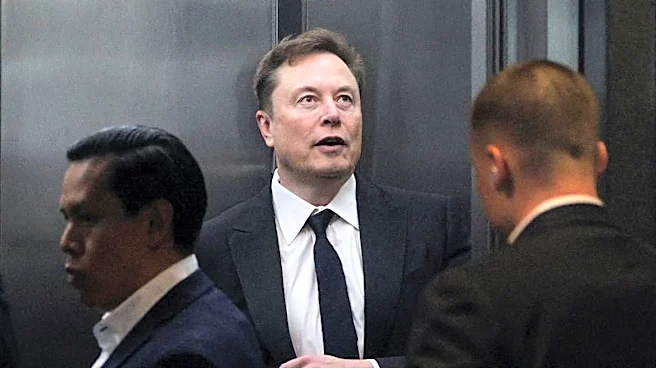
Elon Musk, co-founder of OpenAI, reached out to the company's president, Greg Brockman, to discuss a potential settlement just two days before the trial over Musk's lawsuit against OpenAI was set to begin.
The lawsuit, filed by Musk in 2024, accuses OpenAI and its leadership of deviating from their original commitment to operate as a nonprofit with a charitable mission. In a text message exchange, Musk suggested that both parties drop their claims, but Brockman proposed a different approach, leading to a tense response from Musk. The trial, which began in federal court in Oakland, California, involves significant legal and financial stakes for both parties.
Why It's Important?
This legal battle between Elon Musk and OpenAI highlights the complexities and challenges of maintaining the original mission and structure of tech organizations as they grow and evolve. The outcome of this trial could have significant implications for the governance and operational models of similar tech companies, particularly those in the artificial intelligence sector. It also underscores the potential conflicts that can arise when founding members and current leadership have differing visions for a company's future. The case may influence how tech companies balance innovation with ethical and nonprofit commitments.
What's Next?
As the trial progresses, key figures such as Greg Brockman and OpenAI CEO Sam Altman may be called to testify, providing further insights into the internal dynamics and decision-making processes at OpenAI. The court's decision could set a precedent for how tech companies are held accountable to their founding missions and promises. Additionally, the trial's outcome may affect OpenAI's operations and public perception, potentially influencing investor confidence and partnerships. Stakeholders in the tech industry will be closely monitoring the proceedings for any broader implications on corporate governance and ethical practices.