



What's Happening?
BMW Group has initiated a pilot project to deploy wheeled humanoids from Hexagon Robotics at its Leipzig plant in Germany. The project aims to integrate these humanoids into existing car production processes and explore their applications in battery and component
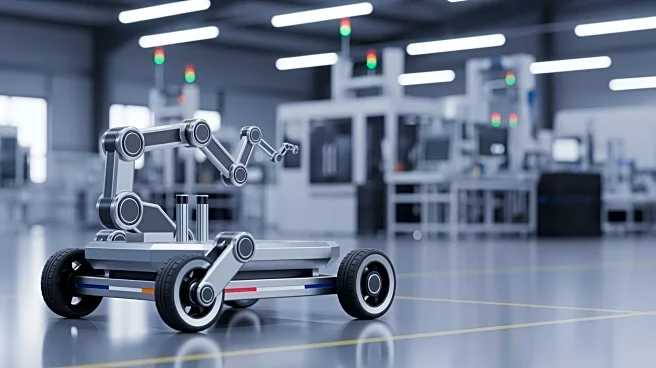
manufacturing. The humanoid robot, AEON, features wheels instead of feet, allowing it to move quickly across flat surfaces. BMW plans to test the multifunctional capabilities of AEON, including its ability to handle various tools and components. This initiative follows BMW's previous successful deployment of Figure AI's humanoids in the U.S., which demonstrated the potential of physical AI in enhancing production efficiency.
Why It's Important?
BMW's pilot project represents a significant step in the integration of humanoid robots into industrial production, potentially transforming manufacturing processes. The use of humanoids like AEON could lead to increased efficiency and reduced physical strain on human workers, particularly in demanding tasks such as battery assembly. This development highlights the growing interest in robotics within the automotive industry, as companies seek to leverage AI and robotics to enhance competitiveness and production capabilities. Successful integration of humanoids could set a precedent for other manufacturers, driving further innovation and adoption of robotics in various sectors.
What's Next?
BMW plans to conduct further test deployments of AEON in April 2026, with the full pilot phase expected to start in summer 2026. The company is also evaluating additional use cases for deploying humanoids in its production facilities. As the pilot progresses, BMW will likely assess the impact of humanoids on production efficiency and worker safety, potentially leading to broader adoption across its global operations. The success of this initiative could influence other automotive manufacturers to explore similar integrations, accelerating the adoption of robotics in the industry.