










What's Happening?
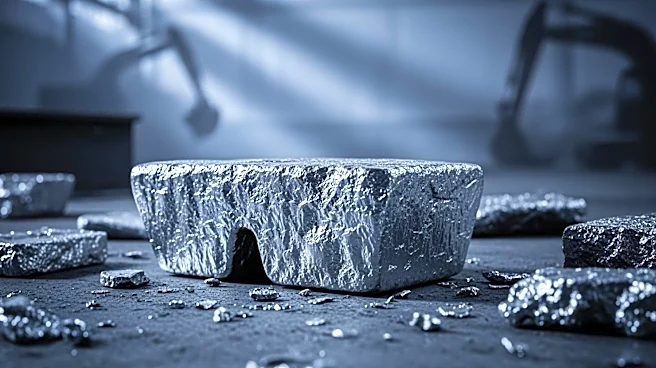
Recent reports indicate a significant increase in U.S. tungsten scrap exports to Japan, driven by Chinese restrictions on the material. This development is part of a broader trend where critical minerals are becoming strategic assets in global supply
chains. The restrictions have intensified competition for tungsten, a metal crucial for aerospace, defense, and semiconductor industries. As China continues to dominate downstream manufacturing, Western countries are accelerating efforts to diversify their supply chains. The U.S.-China Business Council has noted that some critical minerals from China are nearly unobtainable, prompting companies to seek alternative sources. This shift marks a transition from viewing these minerals as mere commodities to recognizing them as instruments of industrial policy.
Why It's Important?
The surge in U.S. tungsten exports to Japan underscores the growing geopolitical significance of critical minerals. As countries like the U.S. and Japan seek to reduce reliance on Chinese supply chains, the focus is shifting towards building domestic industrial capacity. This has implications for industries reliant on these materials, such as electronics, automotive, and defense. The U.S. is taking legislative steps to bolster its magnet manufacturing capabilities, reflecting a broader strategy to enhance supply chain resilience. The situation highlights the interconnectedness of global economies and the strategic importance of controlling critical mineral supply chains.
What's Next?
In response to these developments, countries are likely to continue diversifying their supply chains and investing in domestic processing capabilities. The U.S. may pursue further legislative measures to support its critical minerals industry, while Japan and other nations could increase investments in refining and recycling programs. The ongoing geopolitical tensions may lead to more countries adopting policies to secure their access to essential materials, potentially reshaping global trade dynamics.
Beyond the Headlines
The current focus on critical minerals could lead to long-term shifts in industrial strategies and national security policies. As countries prioritize supply chain control, there may be increased collaboration between governments and industries to develop sustainable and resilient supply networks. This could also drive innovation in recycling and alternative material technologies, reducing dependency on traditional sources.