






What's Happening?
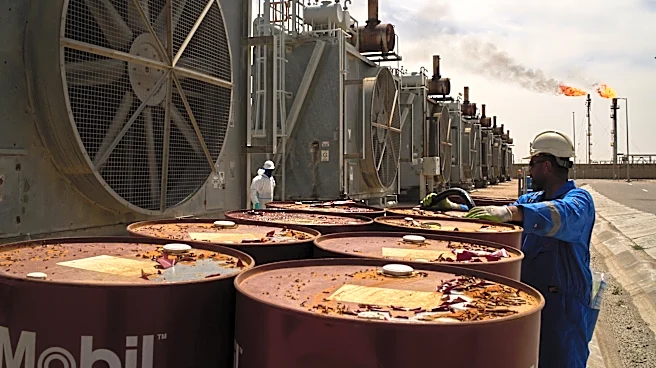
The ongoing conflict in the Middle East, particularly the war involving Iran, has significantly disrupted global oil supplies, leading to a reordering of energy markets. The United States, leveraging its position as a major oil producer, is poised to increase
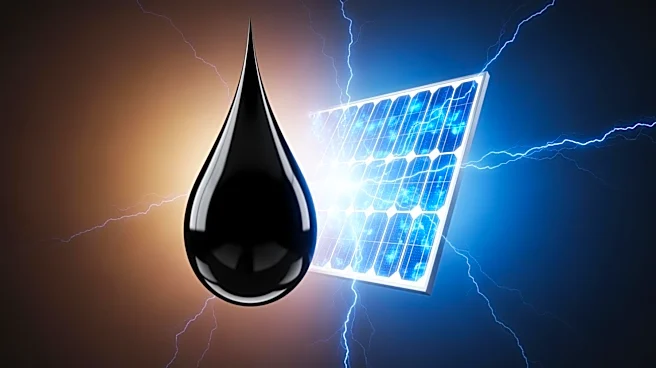
its share in the global oil market. This shift is facilitated by a surge in US crude exports, which have risen by a third to a record 5.2 million barrels a day. The conflict has also accelerated the rise of alternative energy sources, with China emerging as a dominant player in the solar energy sector. China's exports of solar capacity have doubled, positioning it as a leader in the global shift towards renewable energy. The geopolitical tensions have thus highlighted the vulnerabilities of relying on Middle Eastern oil and underscored the strategic importance of diversifying energy sources.
Why It's Important?
The disruption in Middle Eastern oil supplies has profound implications for global energy security and economic stability. For the United States, the situation presents an opportunity to solidify its status as a leading energy exporter, potentially reshaping the global energy landscape. This shift could reduce the world's dependence on Middle Eastern oil, which has historically been a source of geopolitical tension. Meanwhile, China's rapid expansion in the solar energy market underscores the growing importance of renewable energy in the global energy mix. As countries seek to reduce their reliance on fossil fuels, the demand for clean energy technologies is likely to increase, positioning China as a key supplier. This transition could have long-term economic and environmental benefits, promoting energy security and sustainability.
What's Next?
The future of global energy markets will depend on the resolution of the Middle East conflict and the pace of the transition to renewable energy. If the conflict persists, the US and other non-Middle Eastern oil producers may continue to gain market share. However, a resolution could lead to a resurgence of Middle Eastern oil exports, potentially stabilizing global oil prices. Meanwhile, the shift towards renewable energy is expected to continue, driven by technological advancements and policy initiatives aimed at reducing carbon emissions. Countries and companies that adapt to these changes by investing in clean energy technologies and infrastructure are likely to emerge as leaders in the new energy economy.
Beyond the Headlines
The current energy crisis highlights the need for a more resilient and diversified global energy system. The reliance on a few key regions for oil supplies has exposed vulnerabilities that can have widespread economic and political consequences. The transition to renewable energy offers a pathway to greater energy independence and security. However, this shift also presents challenges, including the need for significant investments in infrastructure and technology. Additionally, the geopolitical dynamics of energy markets are likely to evolve, with new alliances and rivalries emerging as countries compete for leadership in the clean energy sector.