


What's Happening?
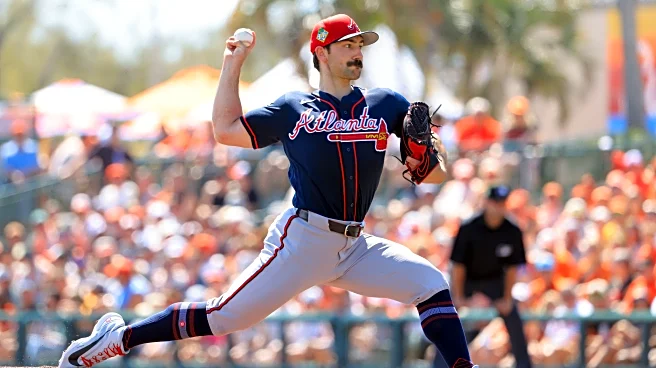
The Atlanta Braves are preparing for the upcoming MLB season with a significant challenge as their shortstop, Ha-Seong Kim, is sidelined due to a torn tendon in his right middle finger. Kim, who was injured in Korea, underwent surgery in Atlanta and is expected
to be out for four to five months. This injury has left the Braves without their primary shortstop at the start of the season. Kim, who signed a one-year, $20 million contract with the Braves, is hopeful for a return around early May after completing his rehabilitation. In response to Kim's absence, the Braves have acquired Mauricio Dubón, a versatile utility player, who may compete for the starting shortstop position. Dubón's potential to secure the role even after Kim's return is being discussed, which could lead to a surprising shift in the team's lineup.
Why It's Important?
The injury to Ha-Seong Kim presents a significant challenge for the Atlanta Braves as they aim to maintain a competitive edge in the MLB. Kim's absence could impact the team's defensive capabilities and overall performance, especially given his substantial contract. The acquisition of Mauricio Dubón provides a strategic backup plan, ensuring the team has a capable player to fill the gap. This situation highlights the importance of depth in a team's roster and the need for flexibility in player roles. The Braves' ability to adapt to this setback will be crucial in their pursuit of success this season. Additionally, the decision to potentially elevate Dubón to a starting role could influence team dynamics and player morale.
What's Next?
As the Braves navigate the early part of the season without Ha-Seong Kim, they will closely monitor his rehabilitation progress. The team will also evaluate Mauricio Dubón's performance as a potential starting shortstop. If Dubón excels, the Braves may face a decision regarding Kim's role upon his return. This scenario could lead to strategic adjustments in the lineup and impact future contract negotiations. The team's management will need to balance short-term needs with long-term goals, ensuring they remain competitive while managing player expectations and contracts.