
What's Happening?
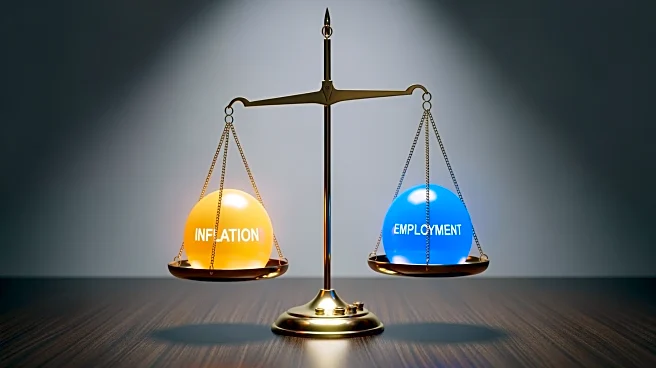
The Federal Reserve is facing a complex situation as oil prices surge due to the ongoing conflict in Iran. This has raised concerns about inflation, which could potentially lead to a pause in the Fed's recent efforts to lower interest rates. However,
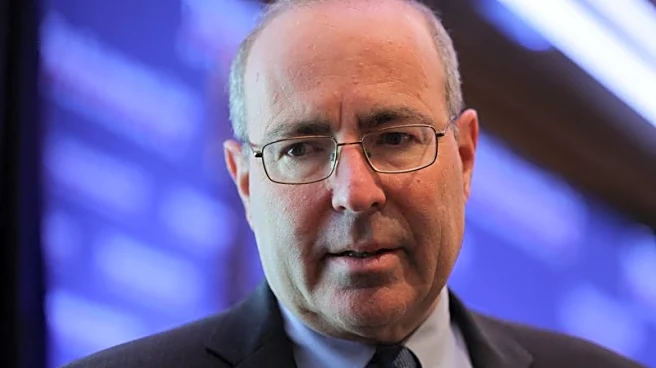
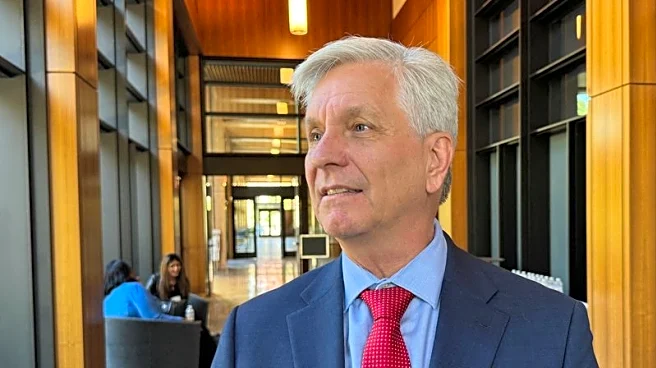
Kevin Warsh, President Trump's nominee for the next chair of the Federal Reserve, is expected to take a different approach. Warsh, who is set to replace Jerome Powell, has expressed confidence in cutting rates despite the rising oil prices. His economic philosophy suggests that inflation is primarily driven by excessive government spending and money printing, rather than fluctuations in oil prices. Warsh's nomination is currently pending Senate confirmation, and he is expected to take office in May or June.
Why It's Important?
The potential appointment of Kevin Warsh as the new chair of the Federal Reserve could significantly impact U.S. monetary policy. Warsh's inclination towards lower interest rates aligns with President Trump's economic agenda, which could lead to a shift in the Fed's approach to managing inflation and economic growth. This change comes at a critical time when the U.S. economy is facing inflationary pressures from rising oil prices. The Fed's decision on interest rates will have broad implications for consumers, businesses, and the overall economic landscape. Lower rates could stimulate economic activity by making borrowing cheaper, but they also risk exacerbating inflation if not managed carefully.
What's Next?
If confirmed, Kevin Warsh will need to navigate the challenges of balancing inflation control with economic growth. His approach to interest rates will be closely watched by financial markets and policymakers. The ongoing conflict in Iran and its impact on oil prices will continue to be a significant factor in the Fed's decision-making process. Additionally, Warsh's views on reducing the Fed's financial assets and leveraging advances in artificial intelligence to boost productivity could influence future economic policies. The Senate's confirmation process will be a key step in determining the direction of the Federal Reserve under Warsh's leadership.