
What's Happening?
The Kentucky Wildcats and Louisville Cardinals football programs have made significant strides in strengthening their teams through the transfer portal. Kentucky's transfer class is ranked seventh nationally,
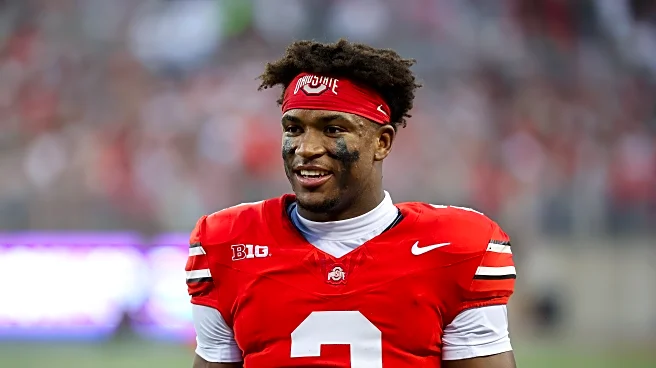
while Louisville's is 14th. Both programs have secured promising quarterbacks, potentially bringing multiyear stability to the position. Kentucky's new coach, Will Stein, has successfully recruited former Notre Dame backup Kenny Minchey, while Louisville's coach, Jeff Brohm, has brought in Ohio State backup Lincoln Kienholz. These moves are part of a broader strategy to enhance their teams' competitiveness in their respective conferences. The Wildcats have also bolstered their offensive line with high-rated transfers, and the Cardinals have added key playmakers for their passing game.
Why It's Important?
This development is significant as it marks a potential shift in the sports landscape in Kentucky, traditionally dominated by basketball. The successful recruitment through the transfer portal could lead to increased competitiveness and success for both football programs. For Kentucky, this could mean reversing their recent regression in the SEC, while Louisville aims to maintain its competitive edge in the ACC. The stability at the quarterback position and the addition of experienced players could lead to improved performance and possibly elevate football's status in a state known for its basketball prowess.
What's Next?
As the transfer portal window closes, both programs will focus on integrating their new recruits into their systems. The upcoming season will be crucial in determining whether these strategic moves translate into on-field success. The performance of the new quarterbacks and the impact of the other transfers will be closely watched. Additionally, the programs will continue to build on this momentum to attract future talent, potentially reshaping the sports hierarchy in Kentucky.
Beyond the Headlines
The emphasis on football could lead to a cultural shift in Kentucky, where basketball has long been the dominant sport. This change could influence fan engagement, media coverage, and even the allocation of resources within the universities. The success of these football programs might inspire other schools in similar basketball-centric regions to invest more in their football teams, potentially altering the collegiate sports landscape.