


What's Happening?
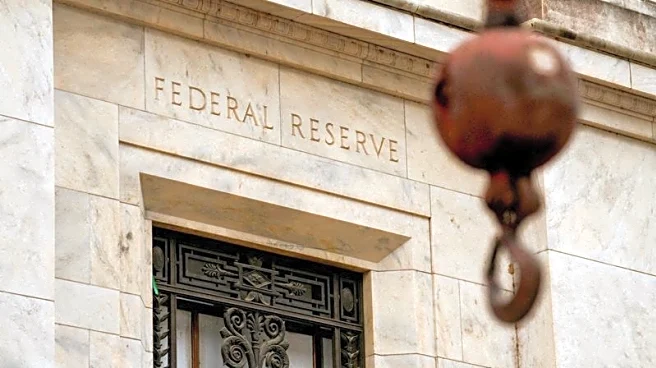
The Federal Reserve has decided to keep its key overnight lending rate unchanged, marking the second time this year that rates have been held steady. This decision comes amidst a backdrop of economic uncertainty fueled by recent geopolitical tensions,
specifically the attacks on Iran by the U.S. and Israel. These events have led to increased geopolitical instability and a rise in global oil prices, which could potentially result in higher inflation and job losses if the conflict persists. The Fed's decision reflects a cautious approach in light of these developments, as well as a disappointing February jobs report. Consumers are advised to prepare for a moderately higher inflationary environment in the short to medium term, according to Kelly Kowalski, head of investment strategy at MassMutual.
Why It's Important?
The Federal Reserve's decision to maintain interest rates has significant implications for consumers and the broader economy. With the potential for higher inflation due to geopolitical tensions, consumers may face increased costs for goods and services. Additionally, the stability of interest rates affects savings and debt management strategies. For savers, maximizing returns through high-yield savings accounts, certificates of deposit, and money market funds becomes crucial to staying ahead of inflation. For those with debt, particularly credit card and mortgage holders, managing interest costs is essential. The decision also highlights the interconnectedness of global events and domestic economic policy, as geopolitical conflicts can have direct impacts on economic stability and consumer confidence.
What's Next?
Looking ahead, the Federal Reserve's future actions will likely depend on the evolution of geopolitical tensions and their impact on the global economy. If the conflict involving Iran continues, it could lead to further economic instability and influence the Fed's decisions on interest rates. Consumers and businesses may need to brace for potential volatility in financial markets and adjust their financial strategies accordingly. Additionally, the Fed's stance on interest rates will be closely watched by investors and policymakers as they assess the broader economic outlook and potential policy responses.