
What's Happening?
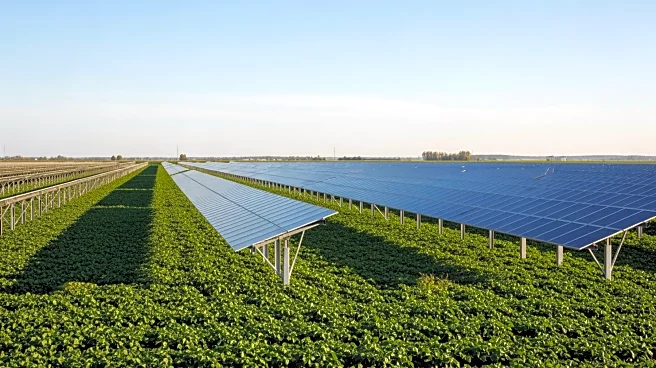
The University of Louisiana at Lafayette is conducting research into agrivoltaics (AV), a method of growing crops alongside solar energy production. This initiative, led by visiting professor Caitlin deNux,
aims to determine the viability of AV in Louisiana's climate and its impact on crop nutrition. The research involves planting vegetable crops, such as broccoli, in the shaded areas between solar panels at the university's solar farm. This approach, already gaining traction in states like Texas and Arkansas, could offer a dual benefit of energy production and agricultural yield. The study also seeks to assess consumer preferences for produce grown through AV compared to conventional methods.
Why It's Important?
The exploration of agrivoltaics in Louisiana is significant as it addresses the growing tension between agricultural land use and solar farm development. With farmland rapidly disappearing due to nonagricultural development, AV presents a potential solution for maintaining agricultural productivity while expanding renewable energy sources. This method could provide farmers with an additional revenue stream by selling energy back to the grid, thus supporting economic sustainability. Moreover, the research could lead to a reduction in reliance on fossil fuels, aligning with broader environmental goals amid climate change concerns.
What's Next?
The success of this research could pave the way for broader implementation of agrivoltaics in Louisiana and potentially influence agricultural practices nationwide. If proven viable, AV could become a model for integrating renewable energy with traditional farming, offering a sustainable path forward for rural economies. The study's findings on consumer preferences could also impact market demand for AV-grown produce, encouraging more farmers to adopt this innovative approach.
Beyond the Headlines
The adoption of agrivoltaics could have deeper implications for rural communities, potentially reshaping land use policies and agricultural training programs. As AV requires different skills compared to traditional farming, there may be a need for educational initiatives to equip farmers with the necessary knowledge. Additionally, the integration of AV could influence cultural perceptions of farming and energy production, promoting a more sustainable and environmentally conscious approach to land management.