
What's Happening?
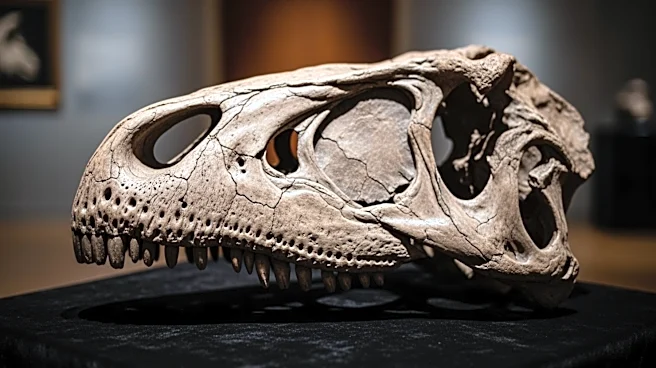
A Tyrannosaurus rex fossil, named Gus, is set to lead Sotheby’s Natural History Auction on July 14. The 67-million-year-old specimen is one of the largest and most complete T. rex skeletons ever discovered,
with an estimated value of $20 million to $30 million. The fossil was excavated in Harding County, South Dakota, and is approximately 63% complete, featuring a well-preserved skull and other significant elements. The auction is expected to attract interest from museums and private collectors due to the fossil's rarity and scientific importance.
Why It's Important?
The auction of Gus represents a significant event in the market for dinosaur fossils, as it could set a new record for the highest price ever paid for a dinosaur skeleton. The sale highlights the growing interest and investment in natural history artifacts, with potential implications for museums and private collectors worldwide. The fossil's scientific value and completeness make it a highly desirable acquisition, potentially influencing future fossil auctions and the valuation of similar specimens. The event underscores the importance of preserving and studying such artifacts for educational and research purposes.
What's Next?
Ahead of the auction, Gus will be on display at the Breuer building from July 1 to 14, alongside other highlights from Sotheby’s natural history, science, and technology auctions. The auction is expected to draw significant attention from international bidders, including museums, foundations, and private collectors. The outcome of the sale could impact the market for dinosaur fossils and set a precedent for future auctions. Additionally, the sale may encourage further exploration and excavation of similar fossils, contributing to scientific research and public interest in paleontology.