
What's Happening?
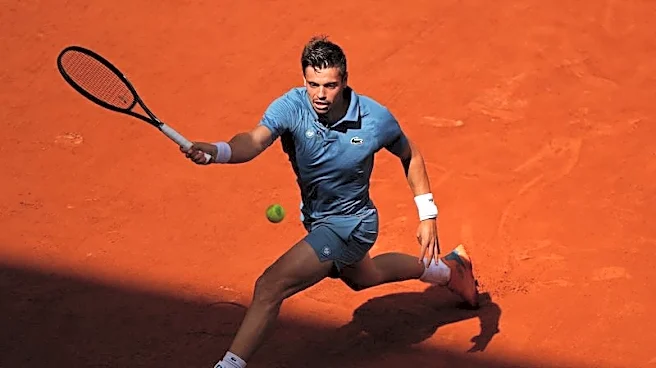
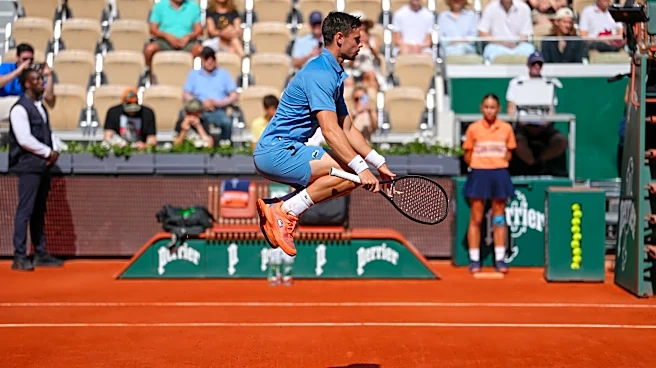
During his French Open debut, Arthur Gea, a 21-year-old tennis player, had to take an emergency bathroom break early in the first set against 13th-seeded Karen Khachanov. Gea, who was trailing 4-2, informed the chair umpire of his urgent need, stating
he could not move anymore and risked an accident on the court. Typically, bathroom breaks are only allowed between sets, but Gea was permitted to leave due to 'medical circumstances' and received medication for stomach pain. The match, played under intense heat with temperatures reaching 31 degrees Celsius (88 Fahrenheit), saw Khachanov winning 6-3, 7-6 (3), 6-0. Gea, who received a wild card entry into the tournament, mentioned feeling unwell since the morning, which worsened during the match.
Why It's Important?
This incident highlights the challenges athletes face in maintaining physical health under competitive and environmental pressures. The allowance of an unscheduled break due to medical reasons underscores the importance of player welfare in sports. It also raises questions about the flexibility of rules in accommodating unforeseen health issues. For Gea, this situation could impact his future opportunities and reputation, as it occurred during a high-profile event. For the tournament, it emphasizes the need for clear guidelines on handling such emergencies, balancing fairness and player health. The incident also draws attention to the potential impact of extreme weather conditions on athletes' performance and well-being.
What's Next?
The French Open organizers may review their policies regarding unscheduled breaks to better address similar situations in the future. This could involve clearer protocols for medical emergencies during matches. For Gea, the focus will likely be on recovery and preparation for future tournaments, ensuring he is in optimal health to compete. The incident may also prompt discussions among players and officials about the adequacy of current health and safety measures, especially in extreme weather conditions. Stakeholders, including players' associations, might advocate for more comprehensive support systems to manage health-related issues during competitions.