






What's Happening?
The global economy is facing significant uncertainty due to a combination of geopolitical conflicts, shifting trade dynamics, and rapid technological advancements. Bernard Baumahl, chief global economist at the Economic Outlook Group, highlighted these
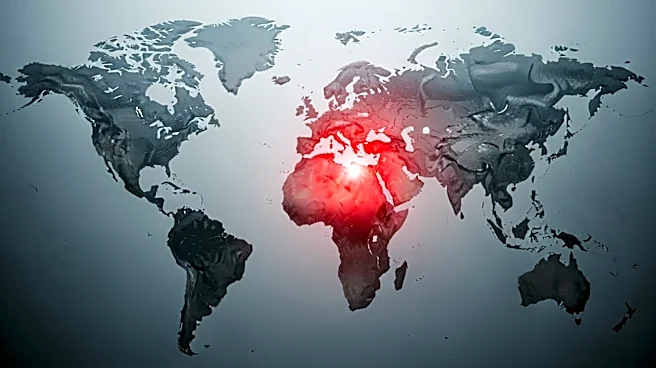
challenges during a presentation at the LIMRA Life Insurance and Annuity Conference. Baumahl pointed out that traditional economic forecasting models are becoming less reliable as the world undergoes 'seismic changes,' particularly in the global energy supply chain due to conflicts in the Middle East. Additionally, the emergence of artificial intelligence is reshaping the U.S. economy, while demographic shifts and declining immigration are slowing population growth. These factors, combined with high levels of public debt, are limiting the ability of industrialized nations to respond to economic slowdowns.
Why It's Important?
The developments outlined by Baumahl have significant implications for the U.S. economy and global markets. The potential for prolonged conflicts in the Middle East could lead to sustained high oil prices, increasing inflationary pressures and potentially triggering a recession. The U.S. economy is projected to grow at a slower rate of 1.9% in 2026, down from earlier estimates. Consumer spending, a major driver of economic activity, is increasingly reliant on rising debt rather than income growth, posing risks to financial stability. Furthermore, the transformative impact of artificial intelligence on productivity and employment could lead to a mismatch between job creation and economic demand, raising concerns about future consumer spending.
What's Next?
The Federal Reserve's response to these economic challenges will be crucial. The central bank may consider modest interest rate hikes to contain inflation, despite political pressures to ease monetary policy. Additionally, the ongoing geopolitical tensions and structural changes in labor and technology will require careful monitoring by policymakers and businesses. The potential for declining fertility rates and restricted immigration could further complicate long-term economic prospects, necessitating strategic planning to address these demographic shifts.
Beyond the Headlines
The broader implications of these economic shifts include the potential 'weaponization of geography' through control of key trade routes, as well as heightened tensions involving major global powers like China, Russia, and Iran. The reliance on foreign investment to finance U.S. deficits also poses a risk, as changes in global investment patterns could impact economic stability. As the world navigates these complex challenges, the ability to plan for risk rather than uncertainty will be critical for economic resilience.