



What's Happening?
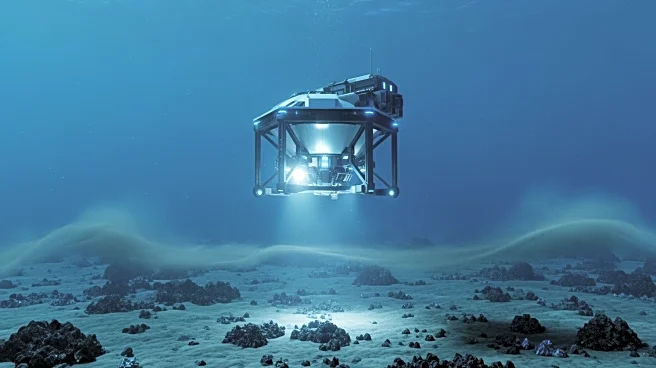
The National Oceanic and Atmospheric Administration (NOAA) has finalized a new rule under the Deep Seabed Hard Mineral Resources Act, which aims to modernize and streamline the permitting process for U.S. entities involved in deep-sea mining. This regulatory change could enable The Metals Company to expedite its plans to collect battery-grade metals from the deep seabed, particularly in the Pacific's Clarion-Clipperton Zone. The revised framework consolidates the previously fragmented process into a single license-and-permit pathway, potentially allowing commercial-scale mining to begin by 2027-2028. The rule is part of a broader effort to secure critical minerals like copper, which are essential for the global energy transition.
Why It's Important?
The new NOAA
rule is significant as it addresses the growing demand for critical minerals, which are vital for electrification and technological advancements. With global copper demand projected to increase by 50% by 2040, the U.S. is looking to secure its supply chain against potential shortages. Deep-sea mining offers a solution to the depletion of onshore resources, providing an alternative source for essential metals like copper, nickel, and cobalt. This development could stimulate demand for advanced mining technologies and support the U.S. in reducing its reliance on foreign mineral supplies, particularly from China.
What's Next?
The next steps involve The Metals Company and other stakeholders conducting further tests and assessments to ensure the environmental and social impacts of deep-sea mining are minimized. The NOAA's streamlined process will allow for parallel progress in engineering development, environmental assessment, and financing. However, the International Seabed Authority (ISA) must finalize its Mining Code to maintain its credibility and governance over international seabed mining activities. The U.S. and other countries will continue to develop domestic processing capabilities to integrate seabed metals into their strategic resource baskets.
Beyond the Headlines
Deep-sea mining raises ethical and environmental concerns, as it involves extracting resources from sensitive ocean ecosystems. The industry must demonstrate that it can operate sustainably, with lower environmental impacts than terrestrial mining. Additionally, a split market may emerge, where 'clean-battery' brands avoid seabed minerals, while defense and strategic buyers prioritize supply security. This could lead to complex trading practices and challenges in traceability, impacting the reputation and acceptance of seabed-derived materials.