






What's Happening?
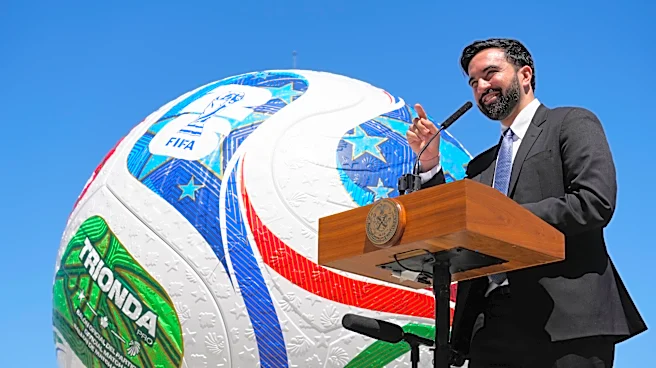
New York City Mayor Zohran Mamdani has announced a lottery for 1,000 FIFA World Cup tickets priced at $50 each, aimed at making the event accessible to local residents. The lottery opens on Monday and will run for six days, allowing up to 50,000 entries
per day. Participants must be at least 15 years old, and each person is allowed only one entry. The tickets cover five group-stage matches and two knockout-round matches, excluding the final. Winners will be notified by email and must purchase their tickets within 48 hours. The initiative includes free round-trip bus service to the matches, and tickets are non-transferable to prevent scalping. This effort is part of Mamdani's broader agenda to ensure that working-class New Yorkers can participate in significant cultural events.
Why It's Important?
This initiative is significant as it addresses the issue of accessibility to major sporting events for working-class citizens. By offering affordable tickets, the city is ensuring that the World Cup, a globally celebrated event, is inclusive and accessible to a broader demographic. This move could set a precedent for other cities hosting large-scale events, highlighting the importance of community involvement and equitable access. It also reflects the city's commitment to making cultural and recreational activities available to all residents, not just those who can afford high ticket prices. The initiative underscores the role of local government in advocating for its citizens' interests in negotiations with large organizations like FIFA.
What's Next?
The lottery will run for six days, and winners will be notified by June 3. The city will monitor the distribution process to ensure tickets are not resold and are used by New York City residents. This initiative may prompt discussions on how other host cities can implement similar programs to increase accessibility. Additionally, the success of this program could influence future negotiations between local governments and international event organizers, potentially leading to more community-focused ticketing strategies.