
What's Happening?
Topcon Agriculture has introduced a series of innovations aimed at enhancing precision agriculture across Latin America, showcased at the Agrishow 2026 in Brazil. The company unveiled the XR-1P GNSS receiver,
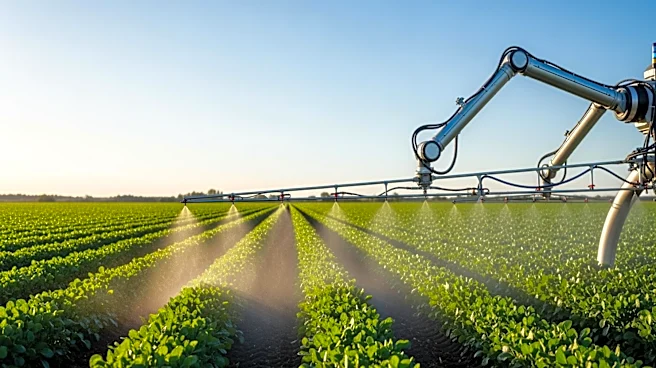
a modular device designed to provide reliable positioning and manual guidance for various farming operations. This receiver bridges the gap between entry-level and high-performance precision agriculture systems. Additionally, Topcon expanded its Value Line portfolio to include vineyard and orchard spraying applications, featuring the CM-20 V Spray Controller for specialty crops like coffee and citrus. A preview of a Sugarcane Yield Monitoring Solution was also presented, tailored to the specific needs of Brazilian agriculture.
Why It's Important?
These innovations by Topcon are crucial for the agricultural sector, particularly in Brazil, one of the world's leading food producers. By making advanced GNSS technology more accessible, Topcon is enabling farmers to improve efficiency and reduce input costs, which is vital in the face of rising agricultural expenses. The precision spraying solutions help minimize waste and enhance crop health, contributing to sustainable farming practices. The Sugarcane Yield Monitoring Solution offers real-time yield visibility, optimizing harvester efficiency and supporting precision agronomy. These advancements are expected to boost productivity and sustainability in agriculture, benefiting farmers and the broader agricultural industry.
What's Next?
Topcon's innovations are likely to see increased adoption across Latin America, supported by a network of distributors providing access to technology and training. As these solutions are integrated into farming operations, they may lead to further developments in precision agriculture, potentially influencing global agricultural practices. The focus on sustainability and efficiency aligns with broader industry trends, and Topcon's continued investment in research and development could result in additional breakthroughs. Stakeholders such as farmers, agricultural businesses, and policymakers will play a role in shaping the future of precision agriculture, with potential impacts on food security and environmental sustainability.