






What's Happening?
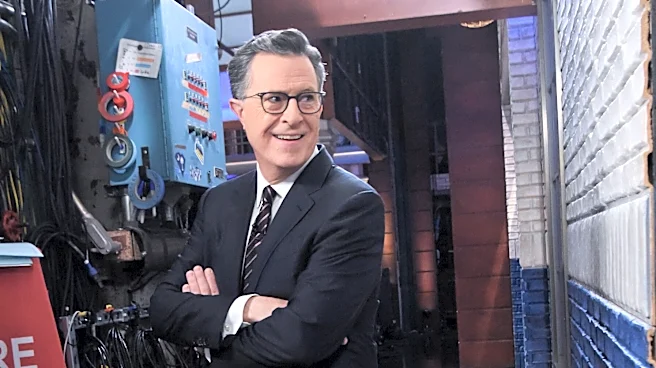
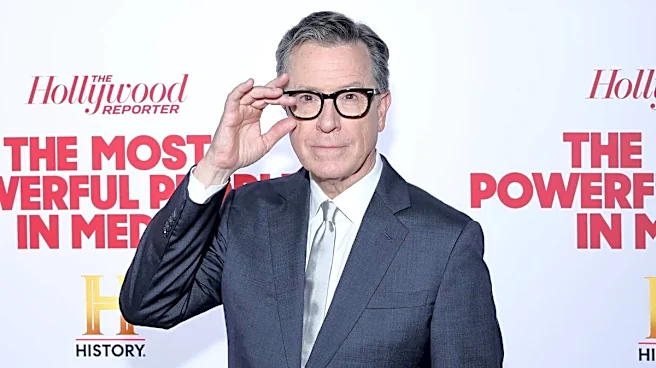
Stephen Colbert bid farewell to 'The Late Show' in a final episode that marked the end of an 11-year tenure. The show, which aired on May 22, 2026, featured a series of celebrity appearances, including Jon Stewart, Ryan Reynolds, and Paul McCartney, who
performed 'Hello, Goodbye' as the closing act. Colbert expressed gratitude to his team and audience, highlighting the joy and camaraderie shared over the years. The finale, which extended 17 minutes beyond its usual runtime, was filled with humor and nostalgia, as Colbert reflected on the show's history and his personal journey. The decision to end the show was attributed to financial considerations by CBS, though some speculated political motives due to Colbert's critical stance on President Trump.
Why It's Important?
The conclusion of 'The Late Show with Stephen Colbert' signifies a significant shift in the late-night television landscape. Colbert's tenure was marked by his sharp political commentary and comedic style, which resonated with a broad audience. His departure leaves a void in the late-night circuit, potentially impacting CBS's viewership and advertising revenue. The show's end also reflects broader industry trends, where financial pressures and changing viewer habits are reshaping traditional television formats. Colbert's outspoken criticism of President Trump and his influence on political discourse highlight the intersection of entertainment and politics, underscoring the role of media in shaping public opinion.
What's Next?
Following the end of 'The Late Show,' CBS plans to replace the program with Byron Allen's 'Comics Unleashed' in the same time slot. This transition marks a strategic shift for the network as it navigates the evolving media landscape. The late-night space may see increased competition as networks vie for audience attention with new formats and digital content. Colbert's departure could also inspire other networks to innovate and adapt to changing viewer preferences. Meanwhile, Colbert's legacy as a late-night host may influence future programming and the role of political satire in media.