

What's Happening?
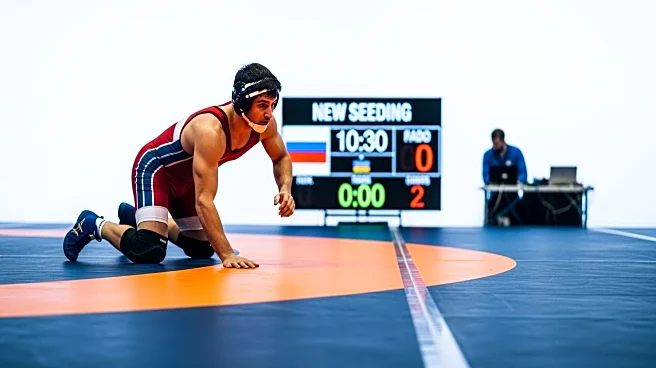
The Big Ten wrestling tournament commenced at the Bryce Jordan Center in University Park, Pennsylvania, featuring top NCAA wrestlers. This year, a new preliminary seeding system was introduced, ranking 14 starters across 10 weight classes. Penn State,
the reigning champion for the past three years, leads with seven No. 1 seeds, including Luke Lilledahl (125 pounds) and Josh Barr (197 pounds). Other top seeds include Nebraska's Antrell Taylor (157 pounds) and Michigan's Taye Ghadiali (285 pounds). The seeding system has faced criticism, notably for ranking Illinois' Lucas Byrd, a defending national champion, as the No. 2 seed behind an undefeated freshman. The tournament's first day included multiple sessions, with matches broadcast on the Big Ten Network and streamed on BIG+.
Why It's Important?
The Big Ten wrestling tournament is a significant event in collegiate sports, showcasing top talent and influencing national rankings. Penn State's dominance with multiple top seeds highlights its strong wrestling program, potentially impacting recruitment and funding. The introduction of a new seeding system aims to enhance competition fairness but has sparked debate over its effectiveness, particularly with controversial seed placements. The tournament's outcomes could affect individual wrestlers' prospects for national championships and professional careers, while also shaping the competitive landscape of college wrestling.
What's Next?
As the tournament progresses, attention will focus on how the new seeding system affects match outcomes and whether it addresses fairness concerns. Stakeholders, including coaches and athletes, may push for further adjustments based on this year's experiences. The tournament will continue with additional sessions, including semifinals and finals, determining individual and team champions. The results will influence selections for the NCAA championships, with top performers gaining momentum and recognition. Observers will watch for any upsets or standout performances that could shift the competitive balance in collegiate wrestling.