



What's Happening?
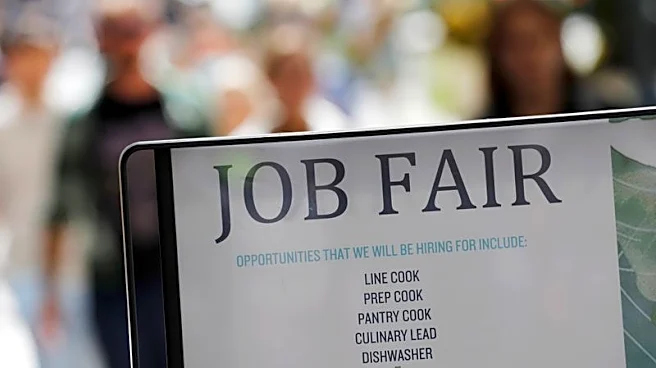
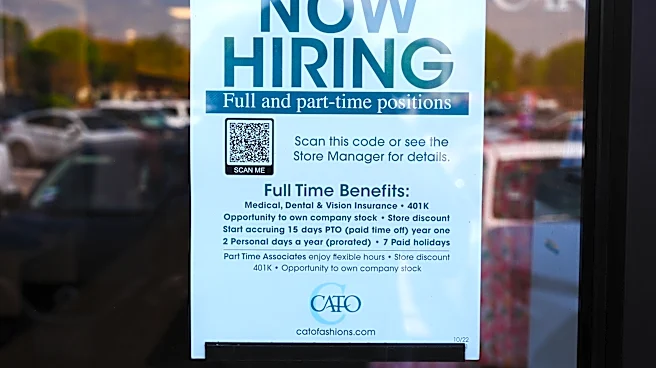
The U.S. labor market saw a robust addition of 178,000 jobs in March, according to the Labor Department. This increase comes as the unemployment rate edged down to 4.3 percent. The job growth was bolstered by the return of workers from West Coast health-care
strikes and improved weather conditions. Despite the positive numbers, the labor market faces challenges due to rising energy prices linked to the conflict in Iran. February's job losses were revised down, showing a decrease of 133,000 positions, while January's job creation was revised up to 160,000. Health care led job creation, adding 76,000 positions, while manufacturing, construction, leisure, and hospitality also saw gains. However, the federal government and finance sectors experienced job cuts. Average hourly wage growth slowed to 3.5 percent over the past year, raising concerns about future wage growth keeping pace with inflation.
Why It's Important?
The March job report is significant as it reflects the resilience of the U.S. labor market amid geopolitical tensions and economic uncertainties. The addition of jobs and the decrease in unemployment rate are positive indicators for the economy, suggesting a recovery from previous setbacks. However, the looming threat of rising energy prices due to the U.S.-Iran conflict could dampen future job creation and economic growth. The report highlights the importance of sectors like health care and manufacturing in driving employment, while also pointing to vulnerabilities in government and finance sectors. The slowing wage growth, despite beating inflation, suggests potential challenges for workers' purchasing power and living standards.
What's Next?
Economists predict that the ongoing conflict in Iran and resulting energy price hikes could impact job creation in the coming months. The labor market may face further volatility, with potential revisions to job numbers and adjustments in economic forecasts. Stakeholders, including policymakers and businesses, will need to monitor these developments closely to address potential disruptions and support continued economic recovery. The focus may shift towards stabilizing energy prices and mitigating geopolitical risks to sustain job growth.