




What's Happening?
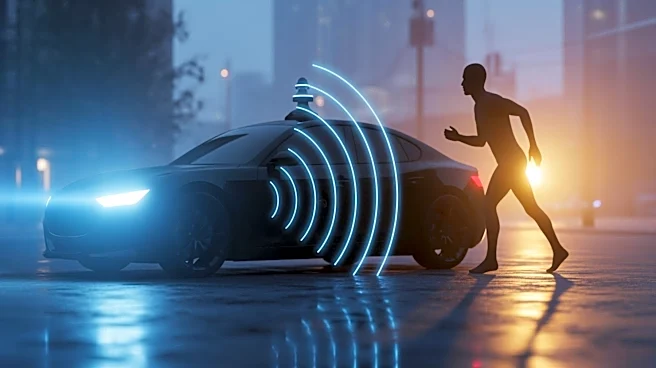
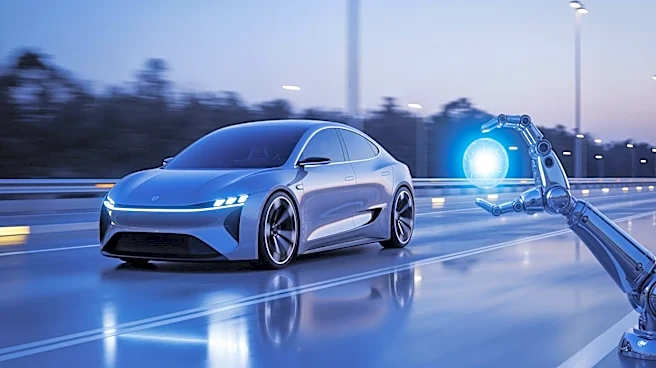
A recent study conducted by the University of Glasgow and KAIST has highlighted significant safety risks associated with self-driving cars when interacting with runners on the road. The research utilized augmented reality technology to simulate scenarios
where runners and pedestrians encountered virtual vehicles. Findings indicate that runners are more likely to take risks, such as not slowing down or stopping at crossings, which current automated vehicle systems may not adequately account for. This behavior increases the likelihood of runners being struck by vehicles in simulated environments. The study involved 24 participants who wore augmented reality headsets to experience interactions with life-sized virtual cars. The research aims to improve safety systems in driverless cars by designing clearer communication methods between vehicles and road users.
Why It's Important?
The study underscores the need for enhanced safety measures in self-driving car technology, particularly concerning vulnerable road users like runners. As automated vehicles become more prevalent, ensuring their ability to safely interact with all types of pedestrians is crucial. The findings suggest that current systems may not fully accommodate the unique behaviors of runners, potentially leading to accidents. This research could influence future design and regulatory standards for autonomous vehicles, emphasizing the importance of clear communication systems to prevent collisions. The broader impact includes potential changes in public policy and industry practices to address these safety concerns, ultimately affecting the rollout and acceptance of self-driving technology.
What's Next?
The study's results may prompt further research into the interaction between self-driving cars and various pedestrian groups, including runners. It could lead to the development of more sophisticated external human-machine interfaces that better communicate vehicle intentions to pedestrians. Additionally, regulatory bodies might consider these findings when drafting policies for autonomous vehicle deployment. Companies involved in the development of self-driving technology, such as Waymo, may need to address these safety concerns to gain public trust and ensure successful integration into urban environments.