






What's Happening?
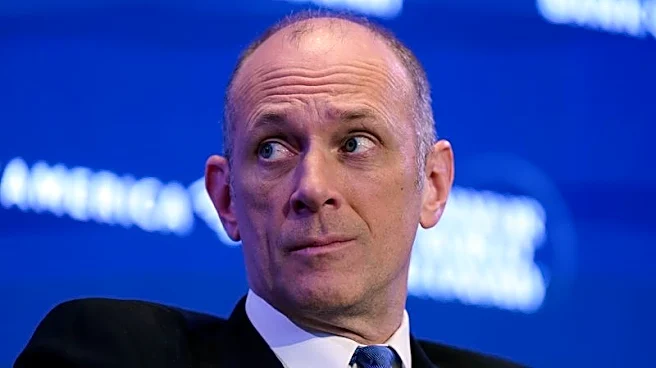
Torsten Slok, the chief economist at Apollo Global Management, is advocating for the view that artificial intelligence (AI) will lead to job growth rather than job losses. Slok argues that AI can lower labor costs, which in turn expands the market for work
and increases employment opportunities. He cites the radiology industry as an example, where AI was expected to reduce jobs but instead has led to higher salaries and more employment. Despite these arguments, some companies continue to use AI as a justification for layoffs, particularly in the software and programming sectors. Slok acknowledges that while AI may disrupt certain industries, it will also create new jobs in AI-related fields.
Why It's Important?
The debate over AI's impact on employment is crucial as it influences public policy, corporate strategies, and workforce planning. If AI can indeed drive job growth, it could alleviate fears of widespread unemployment and economic disruption. This perspective suggests that industries could benefit from increased productivity and innovation, potentially leading to economic growth. However, the ongoing layoffs attributed to AI highlight the need for careful management of technological transitions to ensure that workers are not left behind. Understanding AI's true impact on the labor market is essential for policymakers and business leaders to make informed decisions about education, training, and economic policies.
What's Next?
As AI continues to evolve, industries and governments will need to adapt to its effects on the labor market. Companies may need to invest in retraining programs to help workers transition to new roles created by AI advancements. Policymakers might consider implementing measures to support workers in affected industries, such as unemployment benefits or job placement services. The ongoing dialogue about AI's role in the economy will likely influence future regulations and corporate strategies. Monitoring the balance between job creation and displacement will be key to ensuring that AI contributes positively to economic growth and workforce stability.