


What's Happening?
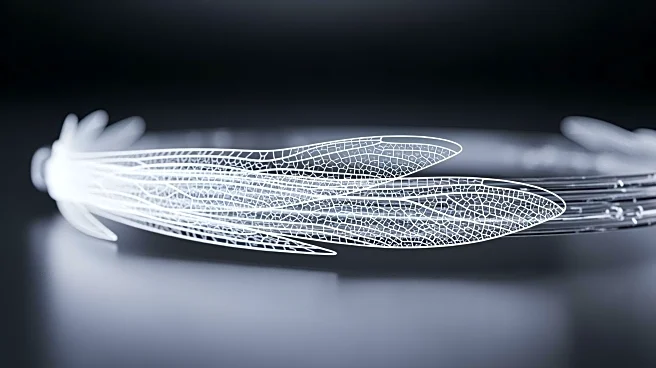
Fibionic, a deeptech company based in Tyrol, Austria, has successfully raised €3 million in a seed round to industrialize its dragonfly-inspired fibre technology. The company, co-founded by Thomas Rettenwander, Johannes Mandler, and Elias Hirschbichler,
aims to revolutionize lightweight construction across various industries. The technology, known as Fibionic fibre placement process (FFP), optimizes the placement of reinforcement fibres, reducing material waste and increasing production speed. The funding will be used to further develop the technology and expand into sectors such as automotive, aerospace, and robotics.
Why It's Important?
The advancement of Fibionic's technology could significantly impact industries reliant on lightweight materials, such as automotive and aerospace. By reducing material waste and increasing production efficiency, Fibionic's approach offers a cost-effective solution for manufacturing high-performance composites. This could lead to more sustainable production practices and lower costs for manufacturers, potentially transforming market dynamics in these sectors. The technology's application in consumer products could also drive innovation in everyday items, enhancing their performance and durability.
What's Next?
Fibionic plans to operationalize an external production line by 2027 and intends to license its FFP technology to international partners. This expansion strategy aims to integrate Fibionic components into a wide range of products, from automotive parts to consumer electronics. The company's long-term goal is to make its technology accessible for everyday household products, broadening its market reach and establishing Fibionic as a key player in the lightweight construction industry.
Beyond the Headlines
Fibionic's technology not only promises economic benefits but also aligns with environmental sustainability goals by minimizing material waste. The efficient use of resources could contribute to reducing the carbon footprint of manufacturing processes. Additionally, the company's focus on integrating its technology into consumer products highlights a shift towards democratizing advanced materials, making high-performance composites available beyond elite markets.