



What's Happening?
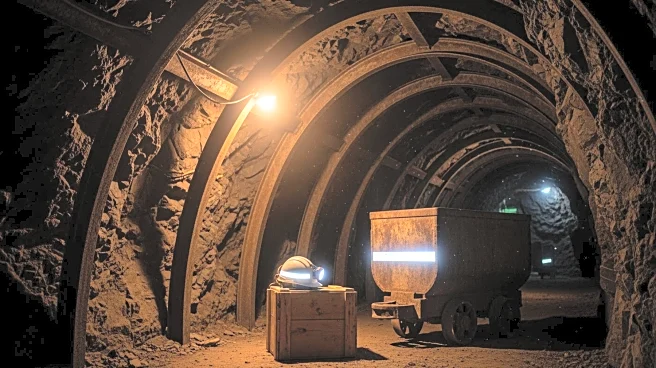
Underground mining continues to face safety challenges due to the limitations of conventional safety systems. Accidents often occur in predictable conditions, such as intersections and confined spaces, where visibility is limited. Despite improvements
in safety metrics, such as a decline in fatalities and injury rates, the industry still struggles with uneven safety performance across operators. Technologies like vehicle-to-everything (V2X) communication are being deployed to improve safety by enabling real-time interaction between vehicles and personnel, but adoption remains uneven due to high costs and infrastructure challenges.
Why It's Important?
The persistence of safety challenges in underground mining highlights the need for continued innovation and investment in safety technologies. While some companies have made significant progress, others lag behind, indicating a disparity in safety outcomes. The adoption of advanced technologies like V2X communication can enhance safety by extending awareness beyond line-of-sight detection, but widespread implementation is hindered by financial and logistical barriers. Addressing these challenges is crucial for improving safety standards and reducing the risk of accidents in the mining industry.
What's Next?
As technology continues to evolve, the mining industry may see increased adoption of advanced safety systems. However, overcoming barriers such as high initial costs and infrastructure challenges will be essential for widespread implementation. Companies may need to invest in training and development to ensure that personnel can effectively use new technologies. Additionally, collaboration between industry stakeholders could facilitate the sharing of best practices and drive improvements in safety standards across the sector.