




What's Happening?
Aviation Week's recent analysis highlights the efficiency of low-cost carriers (LCCs) in mitigating rising fuel costs through reduced carbon emissions per Available Seat Kilometer (ASK). The study focuses on four LCCs: Southwest Airlines, JetBlue, Frontier
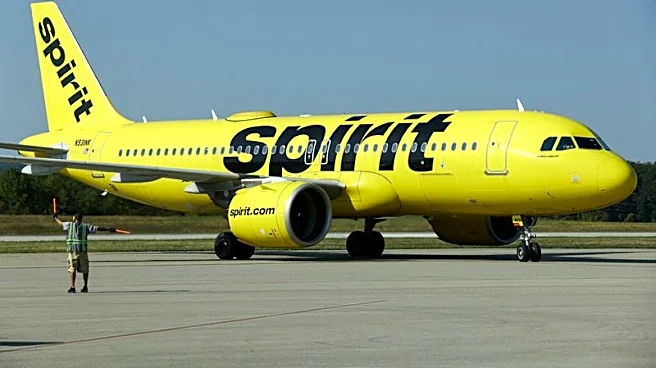
Airlines, and WestJet. Frontier Airlines leads with the lowest CO2 emissions per ASK, attributed to its modern Airbus A320 fleet, with 82% being neo aircraft. JetBlue, categorized as a hybrid carrier, shows less efficiency due to its premium seating class and lower proportion of modern aircraft. Southwest and WestJet, both using Boeing 737-8s, demonstrate similar efficiency gains, with WestJet also operating 787-9s, the only widebody aircraft in the analysis.
Why It's Important?
The findings underscore the importance of fleet modernization in reducing operational costs and environmental impact. As fuel prices rise, airlines with more efficient fleets can maintain competitive pricing and profitability. This trend is significant for the aviation industry, which faces increasing pressure to reduce carbon emissions. Airlines that invest in newer, more efficient aircraft are better positioned to meet regulatory requirements and consumer expectations for sustainability. The analysis also highlights the competitive advantage of LCCs in adapting to economic challenges, potentially influencing market dynamics and consumer choices.