


What's Happening?
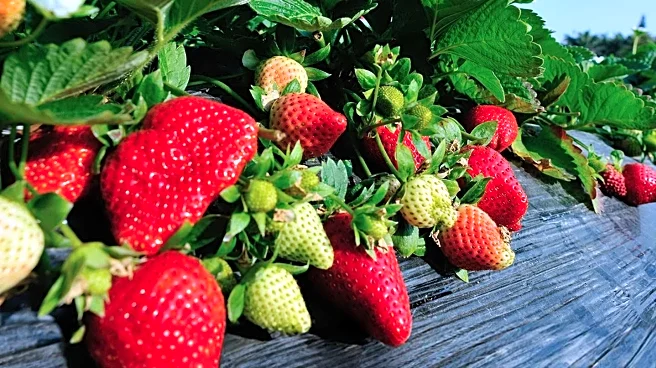
The Ecology Center in San Juan Capistrano is leveraging strawberry season to educate the public on sustainable farming practices. The 28-acre farm is producing over 30,000 pounds of strawberries, grown without chemical fertilizers or pesticides. The center
hosts Strawberry U-pick events, offering a family-friendly experience that also serves as an educational opportunity. Founder Evan Marks emphasizes the importance of connecting the community with agriculture, showcasing regenerative organic farming methods. The center's approach contrasts with conventional strawberry farming, which often relies on harmful chemicals. The Ecology Center's strawberries are part of a broader effort to promote eco-friendly agriculture and educate visitors on the benefits of sustainable practices.
Why It's Important?
The Ecology Center's initiative highlights the growing movement towards sustainable agriculture, which is crucial for environmental health and food security. By educating the public on regenerative farming, the center is fostering awareness and encouraging more sustainable consumer choices. This approach not only benefits the environment by reducing chemical use but also supports local ecosystems and biodiversity. The center's efforts contribute to a larger dialogue on the importance of sustainable food systems, which are increasingly relevant in the face of climate change and environmental degradation. The educational aspect of the U-pick events helps instill these values in the community, particularly among younger generations.
Beyond the Headlines
The Ecology Center's focus on regenerative organic farming represents a shift towards more sustainable agricultural practices that could influence broader industry standards. By demonstrating the viability of chemical-free farming, the center challenges conventional agricultural methods and promotes a model that prioritizes environmental health. This approach could inspire other farms and agricultural businesses to adopt similar practices, potentially leading to a more sustainable food system. Additionally, the center's educational programs help cultivate a more informed public, capable of making choices that support environmental sustainability. The long-term impact of such initiatives could lead to significant cultural and industry shifts towards more eco-friendly practices.