



What's Happening?
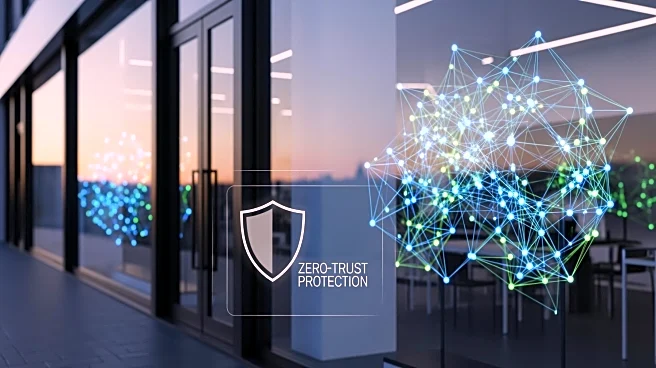
One year after a series of cyber attacks disrupted the retail industry, many retailers have shifted towards zero-trust security frameworks. These attacks exposed vulnerabilities in retail security systems, prompting a reevaluation of traditional perimeter-based
security models. Zero-trust architectures, which require continuous verification of users and devices, have gained traction as retailers seek to protect interconnected systems across ecommerce, payments, and logistics. Despite the adoption of new technologies, the focus has shifted towards integrating security tools to form a cohesive defense against emerging threats. Retailers are also balancing security measures with maintaining a seamless customer experience to prevent sales disruptions.
Why It's Important?
The shift towards zero-trust security reflects a significant change in how retailers approach cybersecurity. This framework addresses the complexities of modern retail environments, where interconnected systems are vulnerable to sophisticated attacks. By focusing on integration and intent, retailers aim to create a unified defense that can adapt to evolving threats. The emphasis on maintaining customer experience highlights the economic stakes involved, as overly aggressive security measures can lead to lost sales. This development is crucial for protecting consumer data and ensuring the resilience of retail operations in an increasingly digital marketplace.
Beyond the Headlines
The adoption of zero-trust security frameworks represents a broader trend towards resilience in cybersecurity strategies. This approach acknowledges that complete security is unattainable, focusing instead on minimizing the impact of potential breaches. The integration of artificial intelligence and behavioral analysis in security systems reflects the industry's move towards proactive threat detection. Additionally, the gap between security expertise and executive leadership remains a challenge, as decision-makers must understand the implications of emerging technologies. As cyber threats continue to evolve, the retail industry must prioritize continuous adaptation and scenario planning to safeguard against future incidents.