



What's Happening?
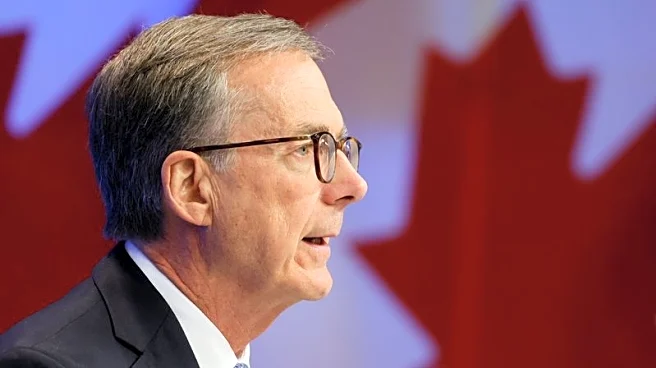
The U.S. Federal Reserve and the Bank of Canada are holding key policy meetings this week as global markets react to rising oil prices and geopolitical tensions in the Middle East. The S&P/TSX composite index in Canada saw a rise, led by gains in technology
stocks and miners, as investors anticipate the outcomes of these central bank meetings. The recent spike in oil prices, driven by attacks on energy infrastructure in the Middle East and disruptions in the Strait of Hormuz, has raised concerns about global inflation. Despite these concerns, the U.S. Federal Reserve is expected to maintain its current interest rates, while the Bank of Canada is also anticipated to keep its policy unchanged. Investors are closely watching for any signals from policymakers regarding future interest rate adjustments in response to potential energy-driven inflation.
Why It's Important?
The decisions made by the U.S. Federal Reserve and the Bank of Canada are crucial as they could influence global economic stability and investor confidence. The surge in oil prices has reignited inflation worries, which could impact monetary policy decisions. For the U.S., maintaining interest rates could support economic growth amid geopolitical uncertainties. However, if inflation expectations rise, it may necessitate a shift in policy to prevent economic overheating. For Canada, as a net oil exporter, the country might be somewhat insulated from the immediate impacts of rising oil prices, but the broader implications for global trade and inflation remain significant. The outcomes of these meetings will be pivotal in shaping economic strategies and investor sentiment in the coming months.
What's Next?
Following the policy meetings, market participants will be keenly observing the statements from the Federal Reserve and the Bank of Canada for any indications of future policy shifts. The focus will be on how these central banks plan to address potential inflationary pressures without stifling economic growth. Additionally, geopolitical developments in the Middle East will continue to be a critical factor influencing oil prices and, consequently, global economic conditions. Investors and policymakers alike will need to navigate these complex dynamics to ensure economic stability.