






What's Happening?
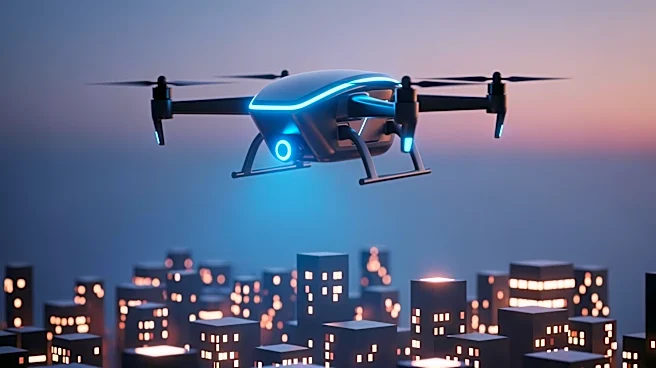
Walmart is expanding its drone delivery service to seven additional U.S. metropolitan areas, aiming to reach 40 million customers by 2027. The service, which has already surpassed 1 million deliveries, will soon be available in Memphis, New Orleans, Philadelphia,
Phoenix, San Diego, the San Francisco Bay Area, and Salt Lake City. Currently, the service operates in cities including Dallas, Houston, Bentonville, Tampa, Orlando, Atlanta, and Charlotte. The drones, operated by providers Wing and Zipline, can deliver packages weighing up to 8 pounds within a 10-mile radius. Customers can place orders through the Walmart app or directly via the Wing app, with deliveries taking an average of 23 minutes. The drones are equipped with sensors to avoid obstacles and follow FAA guidelines, ensuring safe delivery by lowering packages on a tether.
Why It's Important?
The expansion of Walmart's drone delivery service represents a significant shift in the retail and logistics industries, potentially setting a new standard for rapid delivery services. By reaching more customers, Walmart is enhancing its competitive edge against other retail giants like Amazon, which also invests heavily in logistics and delivery innovations. This move could lead to increased consumer expectations for faster delivery times, influencing the broader market to adopt similar technologies. Additionally, the service's expansion may stimulate local economies by creating new jobs related to drone operations and logistics management. However, it also raises questions about regulatory challenges and the environmental impact of increased drone usage.
What's Next?
As Walmart continues to roll out its drone delivery service, it will work closely with local leaders and community members in each new city to ensure a smooth integration. The company plans to expand the service to cover over 270 locations by next year. This expansion may prompt other retailers to accelerate their own drone delivery initiatives, potentially leading to increased competition and innovation in the logistics sector. Regulatory bodies may also need to adapt to the growing use of drones in commercial deliveries, possibly leading to new guidelines and standards for drone operations.