
What's Happening?
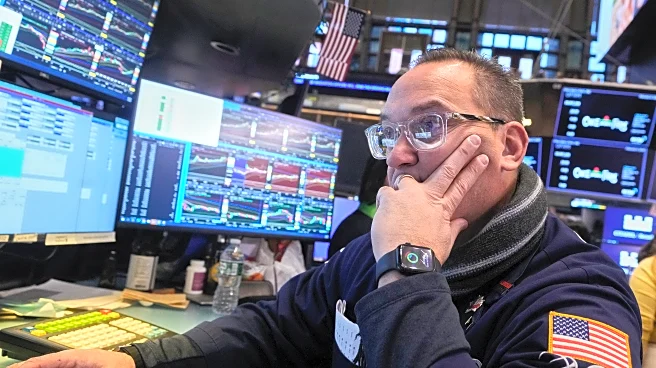
Wall Street is experiencing a significant sell-off as fears of artificial intelligence (AI) disruption grow. The latest trigger was a tax-strategy tool introduced by Altruist Corp, which led to a sharp
decline in shares of companies like Charles Schwab Corp, Raymond James Financial Inc, and LPL Financial Holdings Inc. This sell-off reflects a broader trend where investors are offloading stocks of companies perceived to be at risk of AI-induced disruption. The anxiety stems from the rapid advancements in AI technology, which have the potential to upend various industries, including software engineering and financial services. Despite the sell-off, some industry leaders, like Charles Schwab's CEO, argue that AI could enhance their operations rather than threaten them.
Why It's Important?
The sell-off highlights the growing concern among investors about the impact of AI on traditional business models. As AI technologies continue to evolve, they pose a threat to established companies that may struggle to adapt. This shift could lead to significant changes in the market landscape, with potential winners and losers emerging based on their ability to integrate AI effectively. The financial sector, in particular, is under scrutiny as AI tools promise to streamline operations and reduce costs, potentially displacing human workers. The broader economic implications include potential job losses and shifts in market power, which could affect consumer confidence and spending.
What's Next?
As AI technologies continue to develop, companies will need to adapt to remain competitive. This may involve investing in AI capabilities or forming partnerships with AI firms. Regulatory bodies may also step in to address concerns about job displacement and market fairness. Investors will likely continue to monitor AI developments closely, adjusting their portfolios to mitigate risks associated with potential disruptions. The ongoing evolution of AI will require businesses and policymakers to navigate complex challenges to harness its benefits while minimizing negative impacts.