


What's Happening?
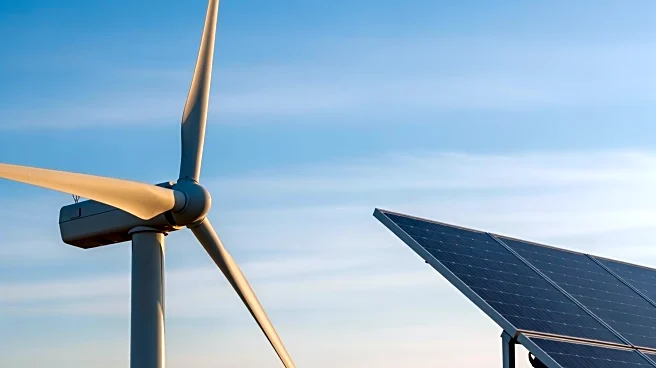
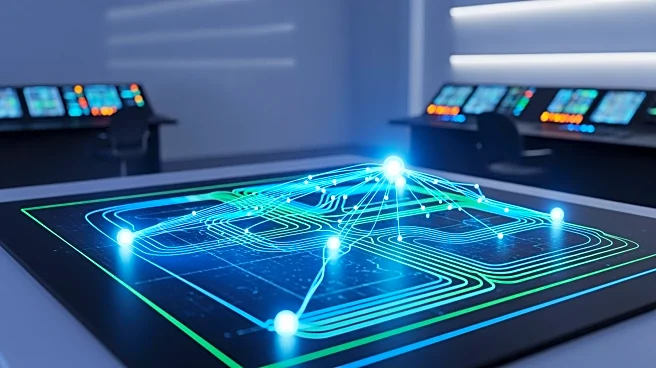
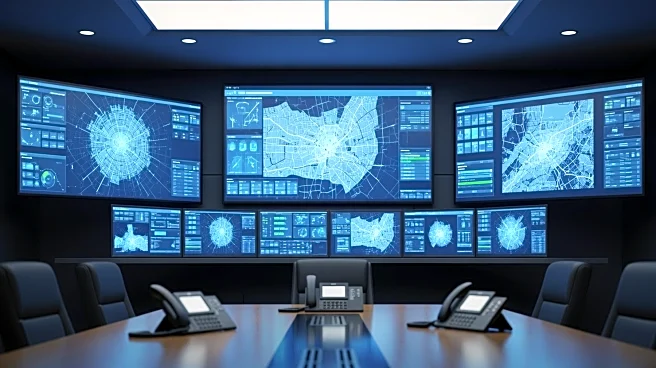
Distributed energy resources (DERs) are increasingly integral to the U.S. power grid, enhancing reliability and resilience. These resources, which include small-scale power generation from renewables and fossil fuels, are crucial for demand response and energy efficiency. DERs provide backup power during outages, reduce transmission losses, and lower energy costs by generating electricity close to consumption points. Microgrids, a key component of DERs, offer reliability for critical infrastructure and remote sites. The integration of artificial intelligence (AI) further optimizes grid management, enabling better forecasting and real-time load balancing.
Why It's Important?
The adoption of DERs represents a significant shift in the U.S. energy landscape, promoting
a more decentralized and resilient power grid. This transition supports energy independence and cost savings for consumers, while also reducing the need for extensive grid infrastructure upgrades. The ability to sell excess power back to the grid and participate in virtual power plants offers new revenue opportunities for consumers. As the U.S. moves towards a more sustainable energy future, DERs play a critical role in balancing renewable energy integration and maintaining grid stability.
What's Next?
The continued deployment of DERs and microgrids is expected to accelerate, driven by advancements in AI and energy storage technologies. Utilities and independent power producers will likely increase investments in DERs to enhance grid resilience and meet growing energy demands. Regulatory frameworks may evolve to support the integration of DERs, encouraging innovation and collaboration between utilities and technology providers. The expansion of DERs could also lead to new business models and market opportunities within the energy sector.
Beyond the Headlines
The rise of DERs reflects a broader trend towards energy democratization, where consumers have greater control over their energy production and consumption. This shift challenges traditional utility models and may lead to regulatory and market reforms. The integration of DERs also raises questions about cybersecurity and data privacy, as more connected devices and systems become part of the energy infrastructure. Addressing these challenges will be crucial to ensuring the secure and efficient operation of a decentralized power grid.