


What's Happening?
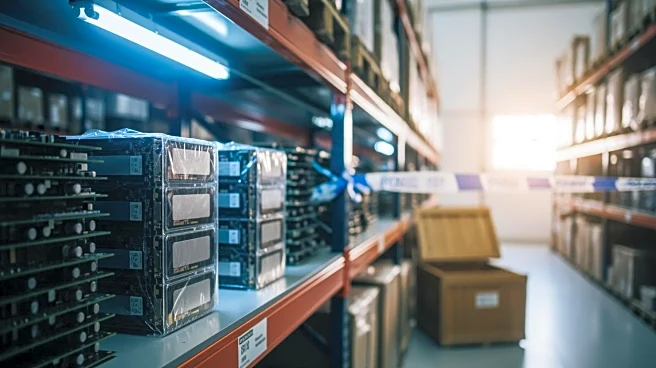
Super Micro Computer, a prominent AI server builder, is facing significant challenges after U.S. prosecutors charged its co-founder, Yih-Shyan Liaw, along with sales manager Ruei-Tsang Chang and contractor Ting-Wei Sun, with smuggling billions of dollars
worth of AI technology to China. The scheme allegedly involved routing U.S.-made servers through Taiwan to Southeast Asia, where they were repackaged and smuggled into China. This operation reportedly moved at least $2.5 billion in AI technology, including over half a billion dollars worth shipped between April and mid-May 2025. Although Super Micro was not named as a defendant, the company has cooperated with investigators and placed the involved employees on leave. The charges have led to a 33% drop in Super Micro's stock value, reflecting investor concerns over potential risks and reputational damage.
Why It's Important?
The charges against Super Micro's executives highlight the ongoing tensions between the U.S. and China over technology and trade. The U.S. has imposed chip export controls to prevent its technology from bolstering China's military capabilities and advancing its AI development. This case underscores the challenges U.S. companies face in navigating these restrictions while maintaining global operations. The incident could lead to increased scrutiny and regulatory measures, affecting Super Micro's business and potentially benefiting competitors like Dell, which saw a 6% rise in shares. The situation also raises broader concerns about supply chain security and the enforcement of export controls, which are critical to national security and economic interests.
What's Next?
As the legal proceedings unfold, Super Micro may face further investigations and audits, potentially leading to additional costs and reputational damage. The company will need to reassure investors and customers about its compliance and risk management practices. Meanwhile, the U.S. government may intensify its efforts to enforce export controls and prevent similar incidents. This could involve stricter regulations and increased monitoring of technology exports. The outcome of this case could influence future policy decisions and impact the competitive landscape in the AI and technology sectors.