
What's Happening?
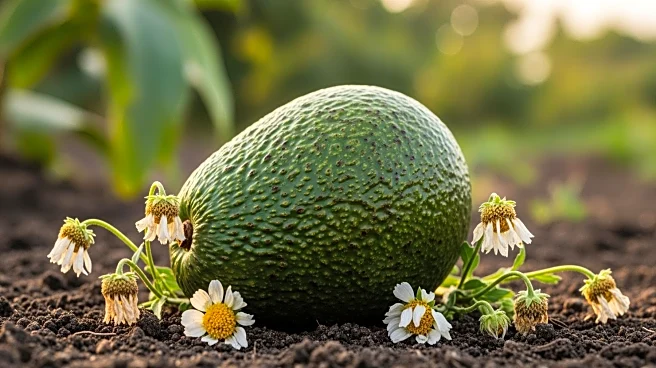
The decline of natural pollinators poses a significant threat to crops like avocados, almonds, and blueberries, which rely heavily on pollination for stable yields. The article highlights the over-reliance on honeybees for pollination, which is insufficient to meet the demands of modern agriculture. Honeybees, while crucial, cannot replace the specialized pollination services provided by the diverse species of wild bees. The decline in wild pollinators is attributed to habitat loss, pesticide use, and climate change, leading to reduced crop yields and increased instability in food production.
Why It's Important?
The decline in pollinators has far-reaching implications for food security and agricultural sustainability. As pollination is essential for the production
of many high-value crops, the loss of natural pollinators could lead to decreased yields, higher food prices, and increased reliance on artificial pollination methods. This situation underscores the need for sustainable agricultural practices that support biodiversity and reduce dependency on a single pollinator species. The article suggests that integrating technology with natural pollination processes could enhance crop yields and resilience, ensuring the continued availability of essential foods like avocados and almonds.
What's Next?
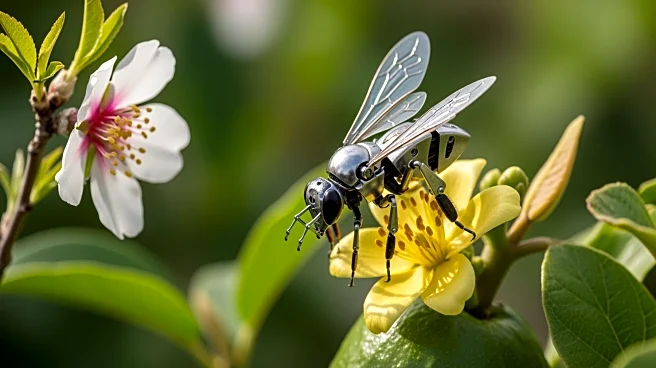
To address the pollinator crisis, a biomimetic approach is proposed, which involves using technology to complement natural pollination processes. This approach aims to mimic the physical and biological functions of natural pollinators, enhancing pollination efficiency without harming existing ecosystems. By combining nature's wisdom with technological precision, agriculture can become more resilient to climate change and other environmental pressures. This strategy could stabilize food production and prices, benefiting farmers, consumers, and the global food system.