
What's Happening?
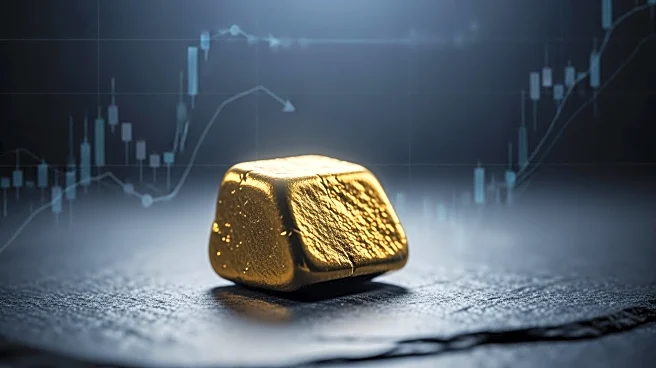
UBS has increased its gold price target to $6,200 per ounce for March, June, and September 2026, up from a previous forecast of $5,000. This adjustment is attributed to stronger-than-expected demand driven by increased investment. Despite this rise, UBS anticipates a slight decline to $5,900 per ounce by the end of 2026, following the U.S. midterm elections. The bank's forecast comes as spot gold prices recently hit a record high of $5,594.82 per ounce, marking a 24% increase this month. UBS cites sustained central bank buying, stronger exchange-traded fund inflows, and increased demand for bars and coins as key factors supporting the price increase. The bank also notes that lower U.S. real rates, global economic risks, and uncertainty over
U.S. domestic policy, particularly around the midterm elections, contribute to the bullish outlook.
Why It's Important?
The revised gold price target by UBS highlights the ongoing economic uncertainties and geopolitical tensions influencing global markets. Gold is often seen as a safe-haven asset, and its rising price reflects investor concerns over potential economic instability. The forecasted price increase could impact various stakeholders, including investors, central banks, and industries reliant on gold. For investors, higher gold prices may offer a hedge against inflation and currency fluctuations. Central banks might adjust their monetary policies in response to changing gold reserves. Additionally, industries that use gold in manufacturing, such as electronics and jewelry, may face increased costs, potentially affecting pricing and consumer demand.
What's Next?
Looking ahead, the gold market will likely remain sensitive to geopolitical developments and economic indicators. UBS's forecast suggests that any escalation in geopolitical tensions or shifts in U.S. domestic policy could further influence gold prices. The Federal Reserve's monetary policy decisions, particularly regarding interest rates, will also play a crucial role in shaping market dynamics. Investors and market analysts will closely monitor these factors to gauge future price movements. Additionally, the upcoming U.S. midterm elections could introduce new uncertainties, potentially impacting investor sentiment and market stability.