








What's Happening?
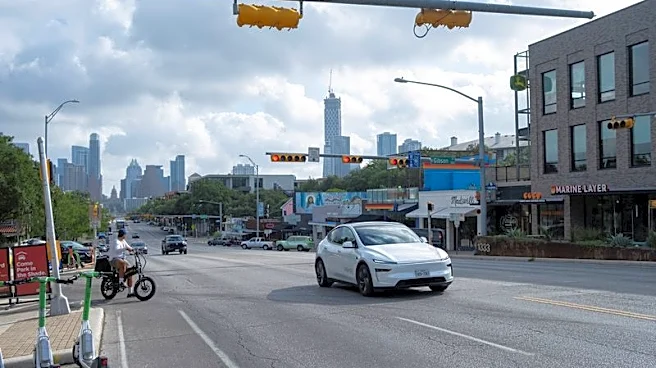
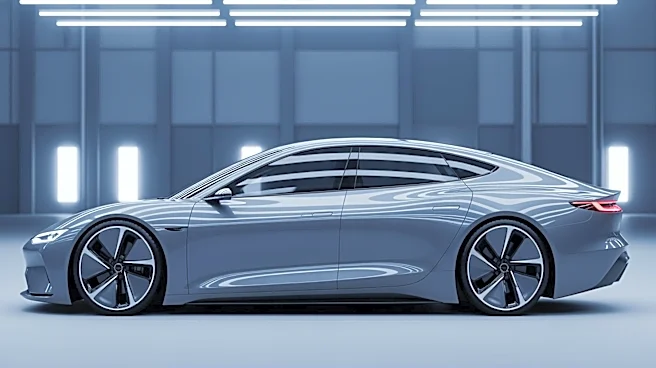
Tesla has announced the commencement of mass production for its autonomous Cybercab at Gigafactory Texas. The Cybercab, which lacks traditional driver controls such as steering wheels and pedals, is now rolling off the assembly line and navigating autonomously.
This development marks a significant milestone for Tesla's autonomous vehicle program. Despite the U.S. National Highway Traffic Safety Administration's (NHTSA) 2,500-vehicle-per-year cap on autonomous vehicles without traditional controls, Tesla's Vice President of Vehicle Engineering, Lars Moravy, confirmed that this cap does not apply to the Cybercab. Tesla is self-certifying the Cybercab under the Federal Motor Vehicle Safety Standards (FMVSS), allowing for unrestricted production. The Cybercab is set to join Tesla's Robotaxi service, which has recently expanded to Dallas and Houston.
Why It's Important?
The production of the Cybercab represents a pivotal moment in the evolution of autonomous vehicles, potentially reshaping the transportation industry. By bypassing the NHTSA's cap, Tesla can significantly increase the availability of autonomous vehicles, accelerating the adoption of self-driving technology. This move could influence regulatory frameworks and encourage other manufacturers to pursue similar paths. The expansion of Tesla's Robotaxi service with the Cybercab could lead to reduced transportation costs and increased accessibility, impacting urban mobility and public transportation systems. The success of this initiative may also bolster Tesla's market position and drive further innovation in autonomous vehicle technology.
What's Next?
As Tesla ramps up production, the focus will likely shift to scaling its Robotaxi network and integrating the Cybercab into existing services. Regulatory bodies may scrutinize Tesla's self-certification process, potentially leading to new guidelines for autonomous vehicles. The automotive industry will be watching closely to see if Tesla's approach sets a precedent for future autonomous vehicle deployments. Additionally, consumer acceptance and trust in fully autonomous vehicles will be critical to the success of the Cybercab, influencing future developments in the sector.