








What's Happening?
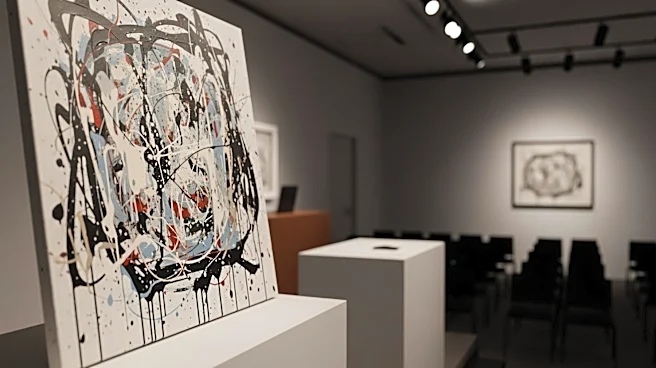
Sotheby's attempted to conduct a private auction for a significant Jackson Pollock painting, Number 19, 1951, at its Manhattan headquarters. The painting, owned by Pace Gallery founder Arne Glimcher, was priced at $50 million. Despite the high-profile
nature of the sale, which included Sotheby's star auctioneer Oliver Barker flown in from London, the auction did not attract enough bidders, leading to its collapse. This event coincides with Pace Gallery's decision to downsize, cutting 50 artists and estates from its roster and laying off 50 staff members. CEO Marc Glimcher cited the changing art world and the broken gallery model as reasons for these adjustments.
Why It's Important?
The failed auction of a high-value Jackson Pollock painting highlights ongoing challenges in the art market, particularly for high-end pieces. This incident underscores the volatility and unpredictability of art auctions, even for works by renowned artists. The downsizing of Pace Gallery further illustrates the pressures facing galleries in adapting to a rapidly evolving art market. These developments may signal a shift in how art is valued and sold, potentially affecting artists, collectors, and galleries worldwide. The art market's response to these challenges could influence future auction strategies and gallery operations.
What's Next?
The art market may see increased scrutiny and strategic changes following this auction's failure. Galleries might explore alternative sales methods or adjust pricing strategies to better align with current market conditions. Additionally, the art community will likely monitor how major auction houses like Sotheby's adapt to these challenges. The outcome of this situation could influence future decisions by artists and collectors regarding the sale and purchase of high-value artworks.