
What's Happening?
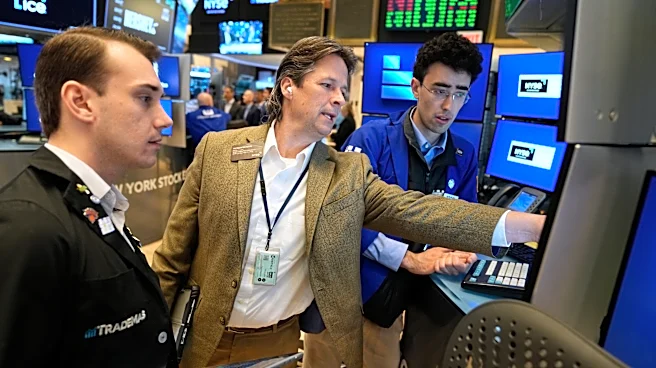
U.S. stock futures experienced a decline as President Trump's deadline for Iran to reopen the Strait of Hormuz approached. The Dow Jones Industrial Average futures fell by 154 points, or 0.3%, while S&P
500 futures decreased by 0.4%, and Nasdaq 100 futures dropped by 0.6%. President Trump has set a deadline for an agreement with Iran, threatening military action if the Strait is not reopened. Recent reports indicate that the U.S. conducted strikes on Kharg Island, escalating tensions. The situation has led to increased oil prices, with West Texas Intermediate crude futures rising over 2% and Brent crude futures up by 1%. The Wall Street Journal reported that a deal is unlikely before the deadline, adding to market uncertainty.
Why It's Important?
The potential escalation of conflict in the Middle East could have significant implications for global energy supplies and financial markets. The Strait of Hormuz is a critical chokepoint for global oil shipments, and any disruption could lead to higher oil prices, impacting inflation and economic stability. The uncertainty surrounding the deadline and potential military action has already affected stock market performance, with investors wary of increased volatility. The situation also complicates the Federal Reserve's interest rate outlook, as it balances inflation concerns with economic growth. Stakeholders in the energy sector and financial markets are closely monitoring developments, as the outcome could influence global economic conditions.
What's Next?
As the deadline approaches, the possibility of military action remains a concern. If no agreement is reached, the U.S. may proceed with its threat to target Iranian infrastructure, potentially leading to further escalation. This could result in increased volatility in financial markets and further disruptions in energy supplies. Investors and policymakers will be watching for any signs of negotiation or de-escalation, which could stabilize markets. The Federal Reserve and other economic stakeholders will need to assess the impact on inflation and economic growth, potentially adjusting monetary policy in response to changing conditions.