





What's Happening?
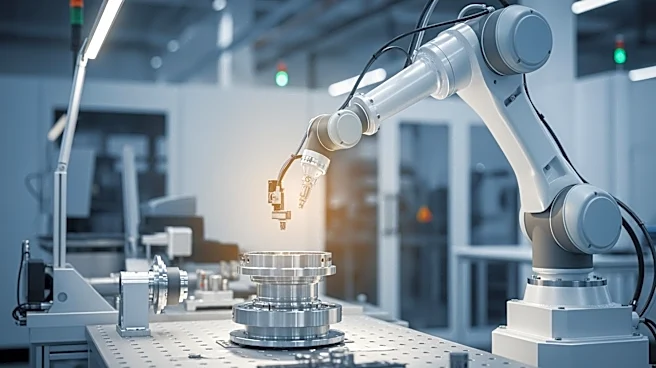
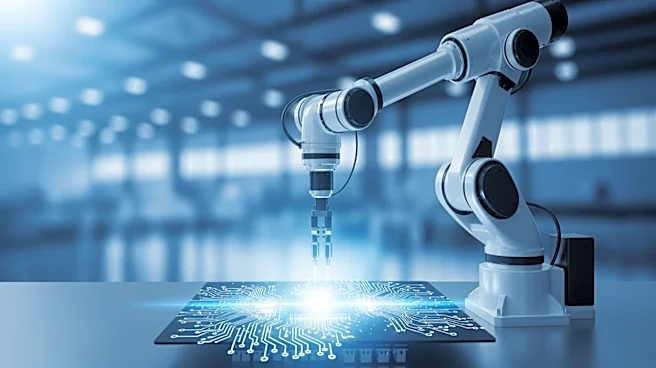
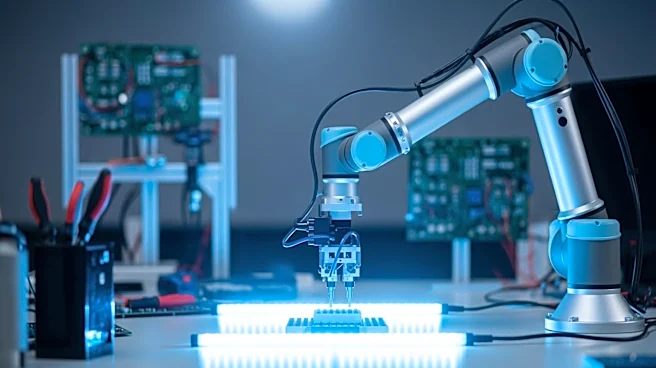
The landscape of factory automation is evolving, with a growing emphasis on software skills among workers. As automation becomes more integrated into production processes, the role of workers is shifting from traditional mechanical tasks to more software-oriented
responsibilities. The International Federation of Robotics reported that over half a million industrial robots were installed globally in 2024, highlighting the increasing prevalence of automation. This shift necessitates workers who are adept at handling software interfaces, updates, and data-driven decisions. The concept of 'robot density' illustrates this change, with significant numbers of robots per manufacturing employees in regions like Western Europe, North America, and Asia. The role of workers is transforming into that of workflow interpreters, where understanding software signals and making informed decisions based on data is crucial.
Why It's Important?
The integration of software skills in factory automation is crucial for maintaining efficiency and productivity. As robots become more prevalent, the ability to interpret software data and make informed decisions is essential to prevent production disruptions. This shift has significant implications for the manufacturing industry, as it requires a workforce that is not only technically skilled but also software literate. The World Economic Forum's Future of Jobs Report 2025 highlights skills gaps as a major barrier to business transformation, with a significant portion of the global workforce needing reskilling or upskilling by 2030. For manufacturers, fostering software fluency among workers is a strategic move to enhance productivity and maintain competitive advantage in an increasingly automated environment.
What's Next?
As factory automation continues to evolve, manufacturers are likely to invest more in training programs that emphasize software literacy alongside traditional robotics training. This includes practical training sessions that integrate software skills into production problem-solving. Companies may also focus on enhancing cybersecurity measures, as connected robots introduce new vulnerabilities. Ensuring that workers are equipped to handle software updates and cybersecurity protocols will be crucial in safeguarding production processes. The ongoing development of automation technologies will likely drive further changes in workforce requirements, necessitating continuous adaptation and learning.
Beyond the Headlines
The shift towards software-centric factory automation has broader implications for the manufacturing industry. It highlights the growing intersection of technology and traditional manufacturing roles, necessitating a cultural shift in how skills are valued and developed. This evolution may also influence educational and vocational training programs, prompting a reevaluation of curricula to better prepare future workers for the demands of a software-driven manufacturing environment. Additionally, the emphasis on software skills underscores the importance of digital literacy in the modern workforce, potentially influencing hiring practices and career development paths within the industry.