







What's Happening?
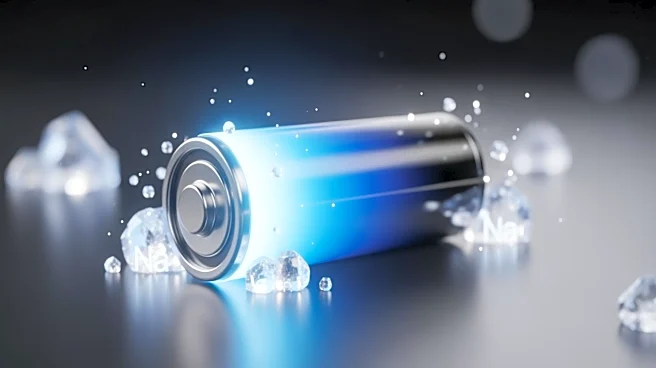
CATL has announced a significant shift in its energy storage strategy by entering into a strategic cooperation agreement with HyperStrong, a major energy storage company in China. The agreement involves the supply of 60 GWh of sodium-ion batteries over
the next three years. This move marks a pivotal milestone in the large-scale deployment of sodium-ion batteries, which are seen as a viable alternative to lithium-ion batteries due to their abundance and cost-effectiveness. The sodium-ion batteries developed by CATL offer advantages such as wide operating temperature adaptability, enhanced safety, and reduced mechanical stress, making them suitable for long-duration energy storage applications. This development is part of CATL's broader strategy to overcome the challenges associated with sodium-ion battery mass production, including energy density limitations and manufacturing issues.
Why It's Important?
The shift towards sodium-ion batteries by CATL is significant for the energy storage industry, particularly in the context of global energy transition efforts. Sodium-ion batteries offer a more sustainable and potentially cheaper alternative to lithium-ion batteries, which are currently dominant in the market. The abundance of sodium compared to lithium could lead to more stable supply chains and lower costs. This development could also reduce the environmental impact associated with lithium mining. For the U.S., which is looking to diversify its energy storage solutions and reduce reliance on lithium, this could present new opportunities for integrating renewable energy sources and enhancing grid stability.
What's Next?
As CATL continues to develop and deploy sodium-ion batteries, the energy storage industry may see increased competition and innovation. Other companies might follow suit, investing in alternative battery technologies to gain a competitive edge. The success of CATL's sodium-ion batteries could lead to broader adoption in various applications, including electric vehicles and grid storage. Additionally, regulatory bodies and policymakers may need to consider new standards and incentives to support the integration of these technologies into existing energy systems.