






What's Happening?
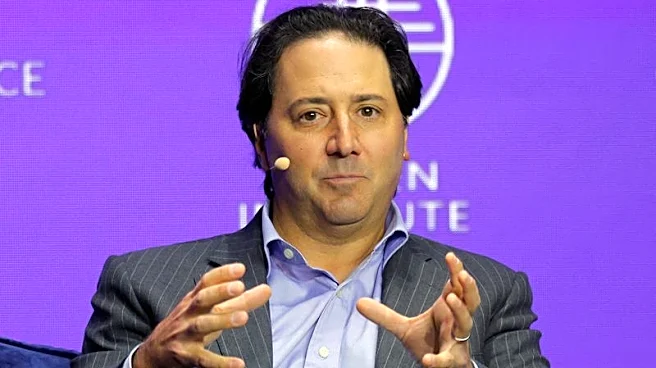
Goldman Sachs anticipates sustained growth in the private credit sector despite recent investor withdrawals and liquidity concerns. According to Kristin Olson, the firm's global head of alternatives for wealth, the current market conditions are seen as
a 'learning phase' rather than a structural setback. The firm continues to advocate for significant allocations to private markets, particularly for ultra-high-net-worth and family office clients, due to the potential for higher risk-adjusted returns. This comes as some private credit funds, including those managed by Apollo Global Management and Ares Management, face redemption requests and have restricted withdrawals. Goldman Sachs' asset and wealth management division, which oversees approximately $3.6 trillion in assets, remains optimistic about the long-term prospects of private credit, driven by demand for yield and the illiquidity premium.
Why It's Important?
The growth of private credit is significant for the financial sector as it offers an alternative investment avenue with potentially higher returns. This is particularly appealing in a low-interest-rate environment where traditional fixed-income investments may not yield sufficient returns. The ability of private credit to attract capital despite liquidity concerns highlights its role in diversifying investment portfolios. For investors, especially those with substantial wealth, private credit provides an opportunity to enhance portfolio performance through exposure to alternative assets. However, the sector's growth also underscores the need for investors to understand the liquidity and redemption mechanics to manage risks effectively.
What's Next?
As investors become more familiar with private credit, it is expected that allocations to this asset class will increase. This could lead to further expansion of private credit offerings and potentially more innovative financial products tailored to meet the needs of high-net-worth individuals and institutional investors. Additionally, the sector may see regulatory scrutiny to ensure transparency and protect investors from potential risks associated with illiquidity. Financial institutions like Goldman Sachs will likely continue to play a pivotal role in educating investors and managing expectations around private credit investments.