


What's Happening?
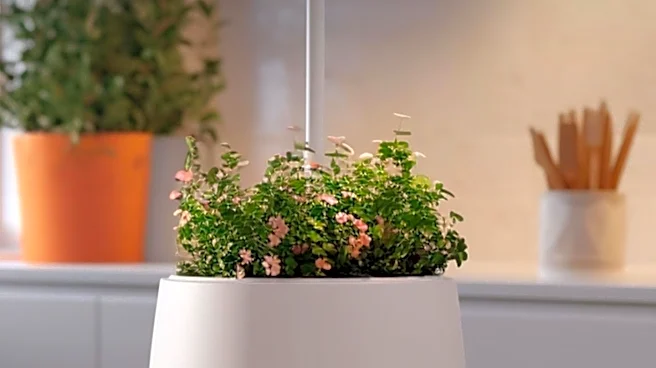
The LeafyPod smart planter has been highlighted as a significant innovation for plant enthusiasts, particularly those who struggle with regular plant maintenance. This device allows users to repot their plants using their own soil and then autonomously
manages the plant's care. The LeafyPod adjusts watering based on environmental conditions such as humidity and sunlight exposure, ensuring optimal plant health. It features a long-lasting battery and requires a bridge to connect to an app for remote monitoring. The app provides detailed information about the plant's needs and tracks watering sessions. The LeafyPod has proven effective in maintaining plant health even when users are unable to tend to their plants regularly, as demonstrated by a user who successfully kept a Dieffenbachia plant thriving during a period of limited mobility due to injury.
Why It's Important?
The introduction of the LeafyPod smart planter addresses a common challenge faced by plant owners: maintaining plant health amidst busy or restrictive schedules. This technology could significantly impact the home gardening market by providing a reliable solution for individuals who may not have the time or ability to care for their plants consistently. The LeafyPod's ability to autonomously adjust care based on environmental conditions could lead to increased plant survival rates and satisfaction among users. This innovation also represents a broader trend towards integrating smart technology into everyday household items, potentially expanding the market for smart home devices and encouraging further development in this sector.
What's Next?
As the LeafyPod gains popularity, it may prompt further advancements in smart home gardening technology. Companies could explore additional features such as integration with other smart home systems or enhanced data analytics for plant care. The success of the LeafyPod might also inspire competitors to develop similar products, potentially leading to a more diverse range of smart gardening solutions. Additionally, as more consumers adopt such technology, there could be an increased demand for educational resources on optimizing smart planter use and integrating them into existing home setups.